Skip to Main Content
Canadian
Canadian owned and operated
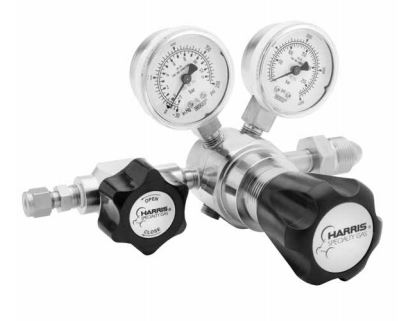
Miller Smith 210 Silverline High Purity Regulator 0-150 PSI

$702.55/ea $461.72/1 per ea only $461.72/eaSave 34%

Usually ships within 3-5 business days

OVERVIEW

Rugged Reliability for Industrial Specialty Gases

When your operation requires the handling of specialty gases without the risk of contamination or equipment failure, the Miller Smith 213-20-00 Silverline Regulator is the tool of choice. Built on a foundation of rugged brass bar stock, this single-stage regulator combines industrial toughness with laboratory-grade precision. The entire body, bonnet, and gauges are plated, offering superior protection against external corrosion and wear, making it suitable for tough shop environments or process plants.

The 213-20-00 is designed for applications where precise control of delivery pressure is required but a two-stage regulator is not necessary. It features a delivery pressure range of 0-150 PSI, easily monitored via large, easy-to-read 2-1/2 inch gauges. The inclusion of a stainless steel diaphragm provides precise pressure control and ensures that the regulator does not introduce contaminants into the gas stream—a critical factor for high-quality welding shielding gases or laser mixtures.

Installation and safety are prioritized in the design. The body is tapped for rear panel mounting, making it an excellent choice for fixed installations or test benches. A built-in capturable preset safety relief valve adds an extra layer of protection for your equipment and personnel. Whether you are setting up a custom gas delivery system or replacing an aging unit, the Miller Smith 213-20-00 delivers the consistency and durability synonymous with the Miller brand.

Industrial Features

  • Robust Construction: Machined from brass bar stock for maximum strength.
  • Versatile Mounting: Rear panel mountable for clean, organized setups.
  • Safety First: Integrated relief valve protects downstream equipment.
Additional Information
Max Inlet:3500 PSI
Max Outlet:150 PSI
Used On Which Gas:Inert Gases, Argon or Nitrogen
Item:Regulator
Packaging Description:1-per-ea
Gas Type:High Purity Non-Corrosive Gases, Specialty Gas
Stage Type:Single Stage
Body Material:Plated Brass Bar Stock
Diaphragm Material:Stainless Steel
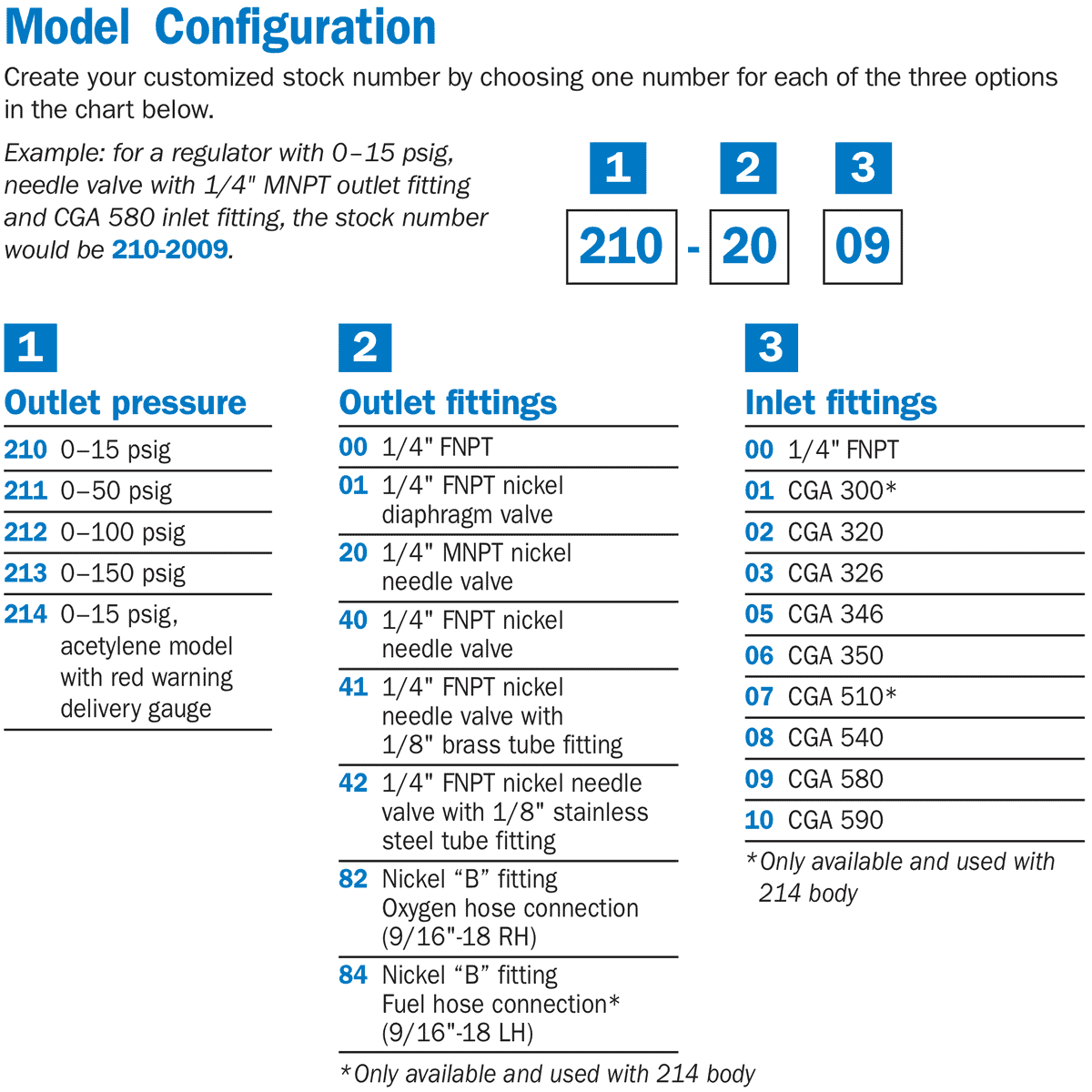
Inlet Connection:1/4" FNPT
Outlet Connection:1/4" MNPT with Needle Valve
Gauge Size:2-1/2"
Series:210 Silverline

INCLUDED

  • Miller Smith 213-20-00 Single Stage Regulator
  • 1/4" FNPT Inlet Connection
  • 1/4" MNPT Outlet with Needle Valve
  • Owner's Manual

APPLICATIONS

  • Instrument analysis and calibration
  • Automotive emissions testing
  • Biological and pharmaceutical laboratories
  • Chemical process plants
  • High purity non-corrosive gas delivery
  • Custom manifold and panel mount systems

FAQ

A stainless steel diaphragm prevents the absorption and release of contaminants (off-gassing) that can occur with rubber or elastomeric diaphragms. This ensures the purity of the gas stream is maintained, which is critical for analytical and high-purity applications.

No, the Miller Smith 213-20-00 is designed for high purity, non-corrosive gases. While the diaphragm is stainless steel, the body is brass, which is not suitable for corrosive gas service.

This regulator features a 1/4" FNPT (Female National Pipe Thread) inlet connection. This allows for versatility in connecting to various gas lines or manifolds rather than a specific cylinder valve directly.

This is a single-stage regulator. It is ideal for applications where the inlet pressure is relatively stable or where slight fluctuations in delivery pressure as the cylinder empties are acceptable.

The maximum inlet pressure rating for the 213-20-00 is 3500 PSI.

Yes, the body of the regulator is tapped to allow for rear panel mounting, making it suitable for integrated systems and test benches.

The regulator is calibrated for a delivery pressure range of 0-150 PSI.

A capturable relief valve allows the vented gas from the safety relief valve to be piped away safely, rather than venting directly into the immediate atmosphere. This is important for safety in enclosed environments.