Canadian owned and operated
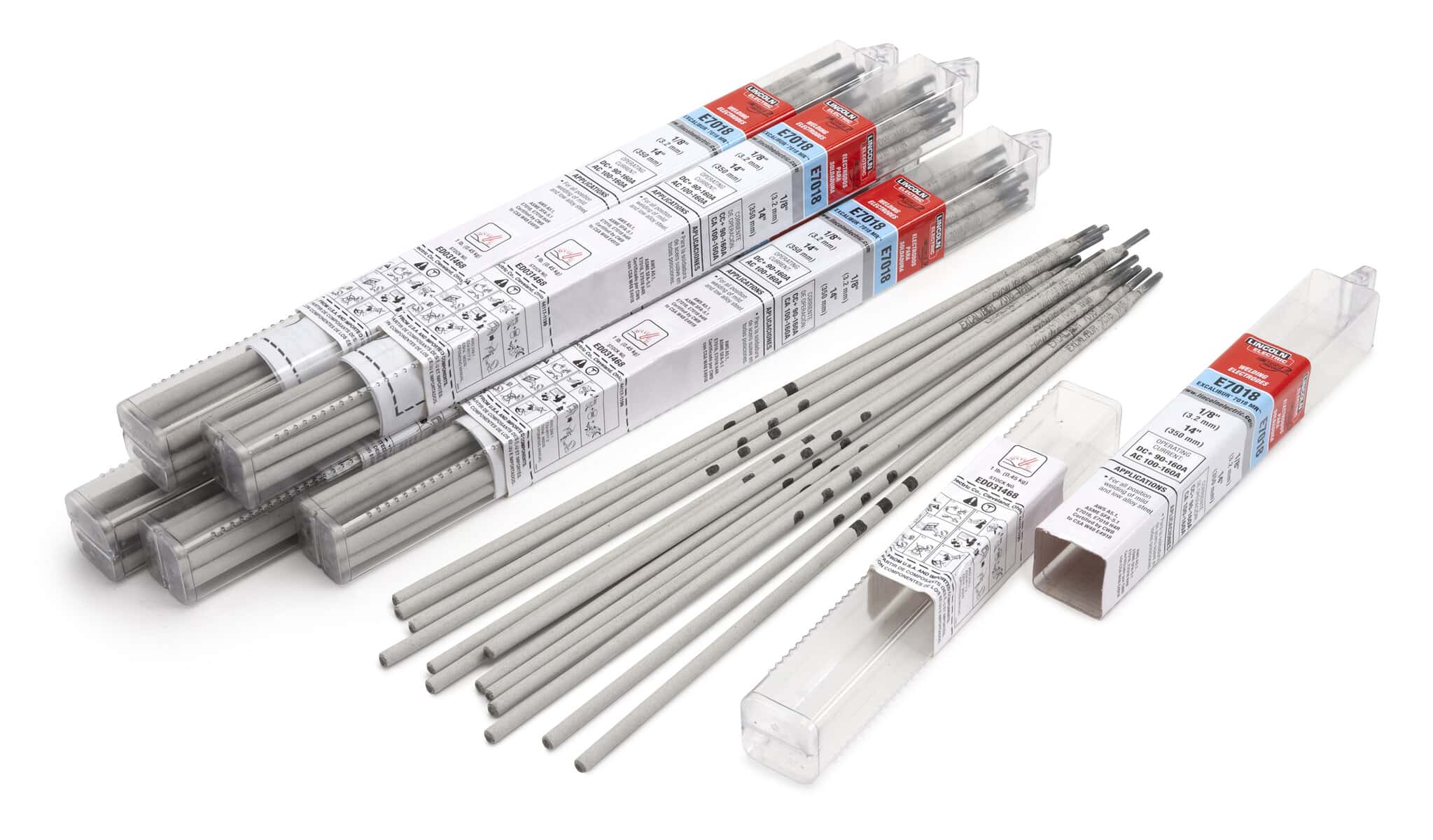
If you have ever struggled with 7018 rods that stick, fingernail, or refuse to restart, the Lincoln Excalibur 7018-1 MR will change your perspective on stick welding. Known among professional welders as one of the smoothest running rods in the industry, the Excalibur series is designed to make your life easier, whether you are welding flat, vertical-up, or overhead. The arc is soft yet penetrating, giving you a clear view of the puddle so you can stack dimes with precision.
One of the standout features of this rod is its puddle control. In vertical-up applications, the shelf builds effortlessly, allowing you to carry a consistent bead without fighting gravity. The coating burns off squarely, preventing the annoying "fingernailing" or side-arcing that plagues cheaper electrodes. When you finish a pass, you will appreciate the slag release; in many cases, the slag curls up and peels off on its own as it cools, leaving a shiny, clean bead underneath. This means less time chipping and wire wheeling, and more time burning rods.
Restriking a 7018 can often be a headache due to the non-conductive flux coating forming a hard shell over the tip. Lincoln has optimized the tip chemistry of the Excalibur 7018-1 to improve strike and re-strike performance, reducing the likelihood of porosity at the start of the weld. Whether you are repairing heavy equipment in the field or welding pipe in the shop, this 1/8" rod runs smooth on DC+ and handles AC machines surprisingly well, making it a go-to for almost any mild steel job that demands strength and reliability.
| Additional Information |
|---|
| Brand:Lincoln Electric |
| Diameter:3.2mm (1/8") |
| Aws Spec:E7018-1 |
| Packaging Description:50lb-can |
| Position:All |
| Polarity:AC/DC, DCEP, AC |
| Amp Range:110-160 A |
| Rod Type:Stick Electrode (SMAW) |
| AWS Classification:E7018-1 H4R |
| Coating Type:Low Hydrogen Iron Powder |
| Welding Position:All Position |
| Storage Instructions:Store in dry location, Hold at 250°F - 300°F after opening |
| Impact Properties:Charpy V-Notch: 84 - 146 J at -45°C |