Canadian owned and operated
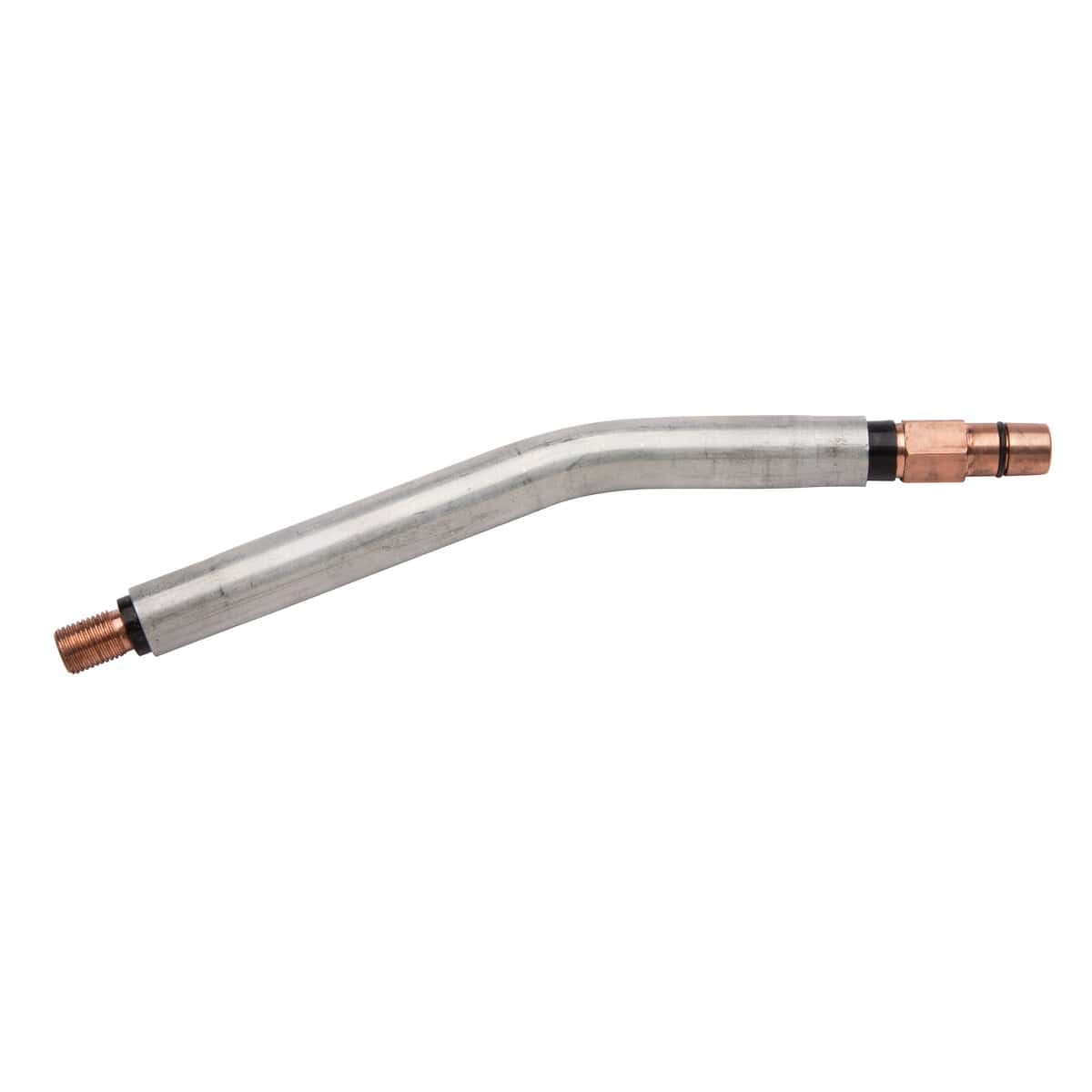
Maximize the uptime and accuracy of your automated welding cells with the Lincoln Electric KP3056-22 Gooseneck. Designed specifically for robotic MIG welding, this component represents the high quality and engineering excellence associated with the Lincoln Electric brand. The gooseneck, or swan neck, is the rigid extension of the welding gun that guides the electrode to the workpiece. In robotic applications, the rigidity and dimensional accuracy of this part are critical factors that directly influence weld quality and repeatability.
The KP3056-22 is characterized by its 22-degree angle. Selecting the right neck angle is essential for successful robotic programming. A 22-degree bend offers a shallow approach, which is often ideal for overhead welds or applications where the torch needs to remain relatively perpendicular to the pipe or plate while the robot arm navigates around tooling. This specific geometry helps in achieving the optimal torch work angle and travel angle, which are vital for proper bead profile and penetration.
Designed as a Robotic A/C (Air-Cooled) component, this gooseneck is built to handle the thermal stresses of welding without the complexity of water cooling. While water-cooled systems are necessary for very high amperages, air-cooled systems like this one are robust, easier to maintain, and less prone to catastrophic failure due to coolant loss. The heavy-duty construction ensures that it resists bending and damage from accidental collisions, protecting the internal liner and gas flow path.
A standout feature of this gooseneck is its adherence to LECO TCP specifications. Tool Center Point repeatability is the holy grail of robotic welding maintenance. When a gooseneck is bent or replaced, the robot's programmed path might no longer align with the weld joint. Lincoln Electric manufactures the KP3056-22 to exact specifications to ensure that the TCP remains constant. This means maintenance teams can replace the neck and get the robot back in cycle immediately, without the time-consuming process of reteaching points or recalibrating the system.
| Additional Information |
|---|
| Brand:Lincoln Electric |
| Packaging Description:1 Per Ea |
| Torch Head Angle:22° |
| Cooling Method:Air Cooled |
| Application:Robotic Welding |
| TCP Standard:LECO TCP |
| Component Type:Gooseneck |