Canadian owned and operated
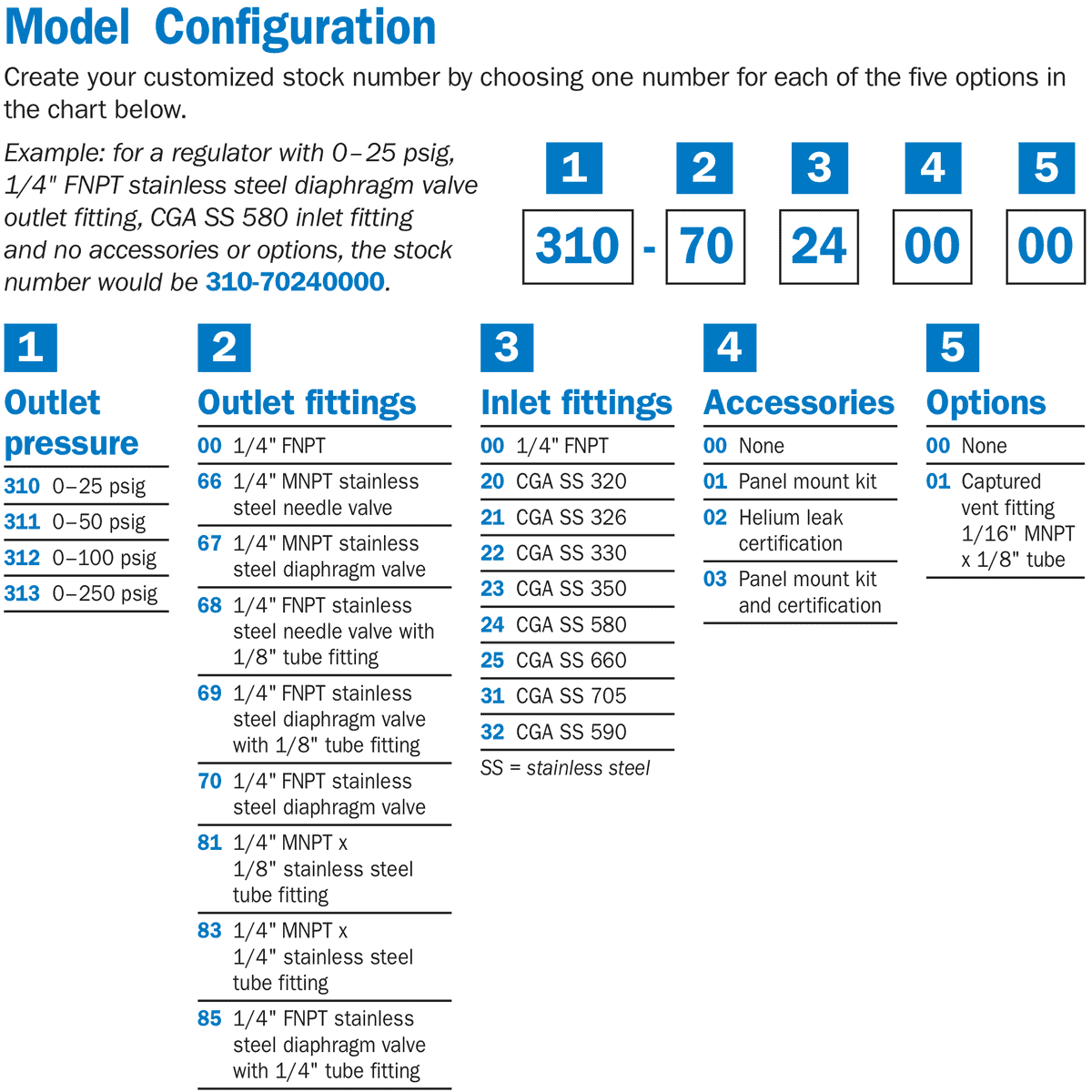
When working with specialty gases, particularly those that are corrosive or toxic, compromise is not an option. The Miller Smith 310-70-31-00-00 Silverline Regulator provides the reliability and durability professional welders and lab technicians need. Built entirely from 316 stainless steel, this single-stage regulator is designed to withstand the harshest chemical environments while delivering precise, stable gas flow. Whether you are managing an ammonia system or a high-purity analytical setup, the 310 Series ensures your equipment lasts longer and performs better.
Precision and Purity
Gas purity is essential for consistent results in high-tech welding and laboratory applications. The Miller Smith 310 utilizes a 316 stainless steel filtered seat and a metal-to-metal diaphragm seal to prevent contamination. The convoluted stainless steel diaphragm is engineered to provide extremely accurate pressure regulation, smoothing out fluctuations and delivering a steady 0-25 PSIG output. This level of control is vital for sensitive downstream equipment that cannot tolerate pressure spikes or drops.
Built for Safety
Handling hazardous gases requires equipment that prioritizes safety. This regulator features a captured vent port in the bonnet, a critical safety feature that allows you to pipe vented gases away from the work area. This is especially important when working with toxic or asphyxiating gases. The robust 316 PCTFE seat material resists degradation from corrosive media, reducing the risk of leaks and extending the maintenance intervals of your gas delivery system.
Versatile and User-Friendly
The 310 Series is designed with the user in mind. It features large 2-1/2 inch gauges that make checking tank levels and line pressure simple, even from a distance. The unit is flexible enough to be mounted directly on a cylinder or installed into a panel system, thanks to its threaded bonnet and rear mounting taps. With a CGA 705 connection, it connects securely to standard stainless steel cylinders used for corrosive gases. Invest in the Miller Smith 310 Silverline for a regulator that combines industrial-strength durability with laboratory-grade precision.
| Additional Information |
|---|
| Brand:Smith Equipment |
| Product Type:Gas Regulator |
| Material:316 Stainless Steel |
| Gas Service:Corrosive, Specialty Gas, High Purity |
| Series:310 Silverline |
| Inlet Connection:CGA 705 |
| Delivery Pressure Range:0-25 PSIG |
| Max Inlet Pressure:3500 PSIG |
| Stage Type:Single Stage |
| Diaphragm Material:Stainless Steel |
| Seat Material:316 PCTFE |
| Gauge Size:2-1/2 Inch |
| Packaging Description:1 per ea |