Canadian owned and operated

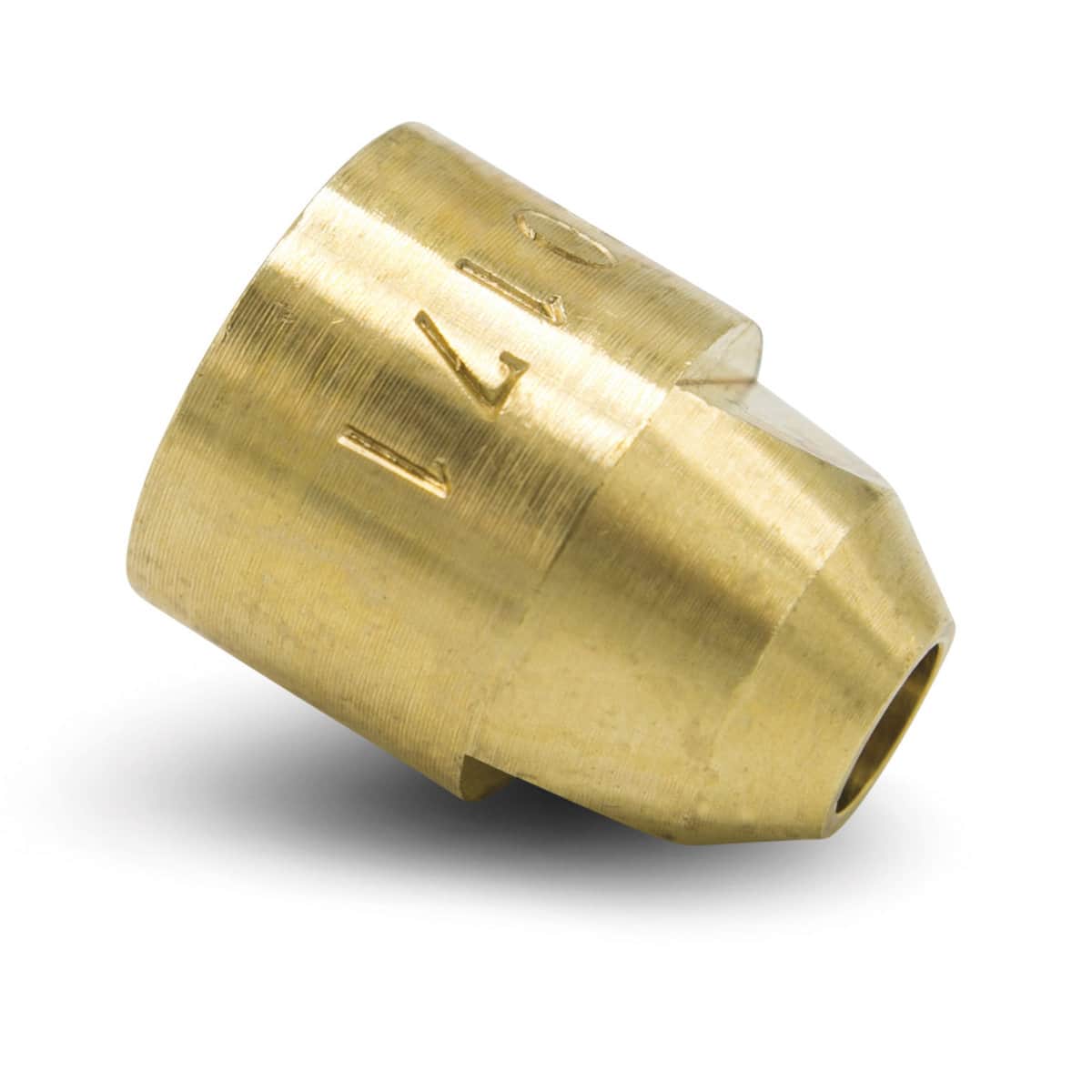
The Lincoln Electric KP2086-2B1 is a specialized contact tip designed explicitly for the high-performance requirements of the Magnum® 600A MIG gun series. This component plays a pivotal role in the welding circuit, serving as the final point of electrical transfer to the electrode wire. It is machined to accommodate 1/16-inch (1.6 mm) diameter wires, making it a staple for heavy industrial applications where high deposition rates and deep penetration are required. The internal bore is finished to strict tolerances to ensure optimal electrical contact while minimizing friction that could impede wire feeding, a common cause of bird-nesting and erratic arcs.
Dimensionally, the tip features a length of 5/16 inch (7.9 mm) and utilizes a standard 18-thread pitch for attachment to the gas diffuser. This short profile is intentional, allowing for specific nozzle-to-work distances and ensuring that the tip remains recessed or flush depending on the nozzle used, which is critical for protecting the tip from excessive spatter and radiant heat. The 18-thread connection provides a robust mechanical interface that maximizes surface area for current transfer, reducing electrical resistance and the associated heat generation at the threaded joint. This is particularly important when operating at the upper amperage limits of the Magnum 600A gun.
Material composition is key to the performance of the KP2086-2B1. Manufactured from a durable copper alloy, the tip offers an excellent balance of electrical conductivity and hardness. As the wire passes through the tip, mechanical wear inevitably widens the bore, eventually leading to a wandering arc. The hardness of this alloy resists this keyholing effect longer than standard copper tips, extending the service interval. Furthermore, the thermal properties of the material help to rapidly conduct heat away from the bore surface, reducing the risk of the wire fusing to the tip (burnback) during arc stops.
For professional welders and maintenance technicians, using the correct contact tip is non-negotiable. The KP2086-2B1 is not just a spare part; it is an integral element of the welding system's parameter stability. When troubleshooting issues like unstable voltage or poor arc starts on a Magnum 600A setup running 1/16" wire, the contact tip is often the first variable to check. Replacing worn tips with fresh KP2086-2B1 units restores the electrical integrity of the gun, ensuring that the power source's output is accurately delivered to the weld pool. Supplied in packs of 10, these tips are an essential inventory item for any shop running heavy MIG operations.
| Additional Information |
|---|
| Brand:Lincoln Electric |
| Packaging Description:pack of 10 |
| Compatible MIG Gun:Magnum® 600A |
| Wire Diameter:1/16 in (1.6 mm) |
| Tip Length:5/16 in (7.9 mm) |
| Thread Size:18 Thread |
| Consumable Type:Contact Tip |