Skip to Main Content
Canadian
Canadian owned and operated
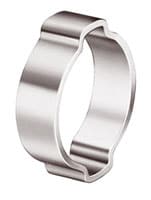
OET10100016 - Oetiker 1113 Double Ear Clamp for 1/4 Inch ID Hose

Packaging: 1 per each
$1.00/ea $0.90/1 per each only $0.90/eaSave 10%

In stock

OVERVIEW

Secure Your Welding Lines with Professional Crimp Clamps

In the welding shop, a leaking coolant line or a loose gas hose isn't just an annoyance—it's a downtime hazard. The Oetiker 2-Ear Zinc-Plated Hose Clamp is the professional welder's choice for securing 1/4" ID hoses (approx. 1/2" OD) on TIG torches, MIG guns, and water coolers. Unlike traditional worm-gear clamps that can strip out, loosen over time, or leave a sharp tail sticking out to snag on your gloves and cables, these ear clamps provide a smooth, permanent, and snag-free profile. Once crimped, they stay put, ensuring your shielding gas and coolant stay where they belong.

The "double ear" design is particularly beneficial for water-cooled welding setups. As your coolant heats up and cools down, hoses expand and contract. A rigid clamp might lose its grip or cut into the hose during these cycles. The Oetiker 2-ear design acts like a spring, maintaining constant tension on the fitting to prevent leaks even during thermal cycling. The zinc-plated steel construction resists rust and corrosion, standing up to the harsh environment of a fabrication shop. The band edges are smooth and deburred, so you won't damage expensive TIG power cables or soft gas lines when applying the clamp.

Installation is fast and simple using standard pincer pliers. Just slide the clamp over the hose and fitting, position it, and squeeze the ears closed. The result is a clean, professional-looking connection that tells your customers you care about the details. Whether you are repairing a torch lead, setting up a new water cooler, or running pneumatic lines for shop air, these clamps offer the security and durability required for industrial welding operations. Stop fighting with screwdrivers and slipping bands; switch to Oetiker crimp clamps for a leak-proof shop.

Additional Information
Brand:Oetiker
Item:Hose Clamp
Packaging Description:pack of 1
Material:Zinc Plated Steel
Clamping Range:0.425 in - 0.512 in
Band Width:0.276 in
Clamp Type:2-Ear
Nominal Hose Size:1/4 in ID

INCLUDED

  • 1x Oetiker 2-Ear Zinc-Plated Hose Clamp (0.425" - 0.512" Range)

APPLICATIONS

  • Water-cooled TIG torch lines
  • MIG gun gas hoses
  • Industrial pneumatic air lines
  • Automotive fluid transfer
  • Low-pressure hydraulic systems
  • Beverage dispensing equipment

FAQ

This clamp is designed for a diameter range of 0.425 inches to 0.512 inches (10.8 mm to 13.0 mm). It is critical to measure the outside diameter (OD) of your hose while it is pushed onto the fitting to ensure it falls within this range.

Yes, installation requires a pair of pincer pliers (also known as ear clamp pliers) to crimp the ears. Standard pliers may not apply force evenly and could damage the clamp.

No, Oetiker ear clamps are designed for permanent installation. Removal typically involves cutting or prying the ear open, which destroys the clamp. This ensures a tamper-proof connection.

It fits most standard 1/4" ID welding hoses that have an outside diameter (OD) around 1/2". Since wall thickness varies by manufacturer, always measure the OD of your specific hose to confirm it is between 0.425" and 0.512".

The 2-ear design provides a wider range of clamping force and greater elasticity. This allows the clamp to accommodate thermal expansion and contraction better than single-ear designs.

The clamp is made of zinc-plated steel, which offers good corrosion resistance for standard indoor and shop environments. For marine or highly corrosive environments, stainless steel would be preferred, but zinc-plated is standard for general welding and pneumatic use.

No, Oetiker clamps feature deburred edges specifically designed to prevent damage to the hose material during clamping and operation.

Proper closure is indicated by the visible deformation of the ear. The ears should be crimped firmly, but the gap at the base of the ear does not need to be completely closed; the tension is what matters.
Google Rating
4.9
Based on35reviews
×
js_loader