Canadian owned and operated
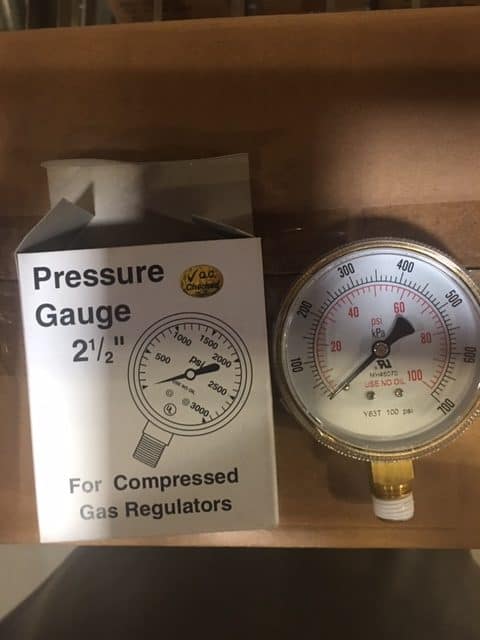
Is your regulator gauge cracked, stuck, or hard to read? The Western Enterprises 2.5-Inch Pressure Gauge (0-100 PSI) is the perfect upgrade or replacement for your welding setup. Most standard regulators come with smaller 2-inch gauges that can be difficult to squint at through a welding helmet or from across the bench. This larger 2.5-inch dial makes checking your working pressure significantly easier, helping you maintain the consistent gas flow needed for quality welds.
This gauge is calibrated up to 100 PSI, which is the ideal range for the "delivery" or "working pressure" side of your regulator. It allows for fine-tuning of your gas flow, whether you are TIG welding with Argon or cutting with Oxygen. The clear markings ensure you aren't guessing your settings. Because it is cleaned for Oxygen service, you can safely use it on your Oxygen regulators as well as for inert shielding gases like Argon/CO2 mixes, Helium, and Nitrogen.
Welding shops are tough on equipment. That's why this gauge is built with a sturdy steel case and a brass internal movement that stands up to vibration and daily use. The 1/4" NPT threads are the industry standard for most larger regulators (check your existing gauge stem size to be sure; smaller regulators may use 1/8"). Simply apply a small amount of oxygen-safe PTFE tape to the threads, screw it into the outlet port of your regulator, and you're back in business with a reliable, easy-to-read display.
Western Enterprises is a trusted name in gas control equipment. When you choose a Western gauge, you aren't just buying a generic part; you are buying a component engineered for safety and precision. Don't let a faulty gauge ruin your weld quality or compromise safety—swap it out with this high-quality replacement.
| Additional Information |
|---|
| Diameter:2.5" |
| Max Psi:100 |
| Used On Which Gas:Oxygen or Inert Gases |
| Which Side?:Using |
| Used On A:Regulator |
| Connection Type:1/4" NPT Bottom Mount |
| Case Material:Painted Steel |
| Movement Material:Brass |
| Service Type:Cleaned for Oxygen Service |
| Packaging Description:1 per each |
| Used On A:Regulator |
| Used On Which Gas?:Oxygen or Inert Gases |
| Max Psi?:100psi |