
Canadian owned and operated
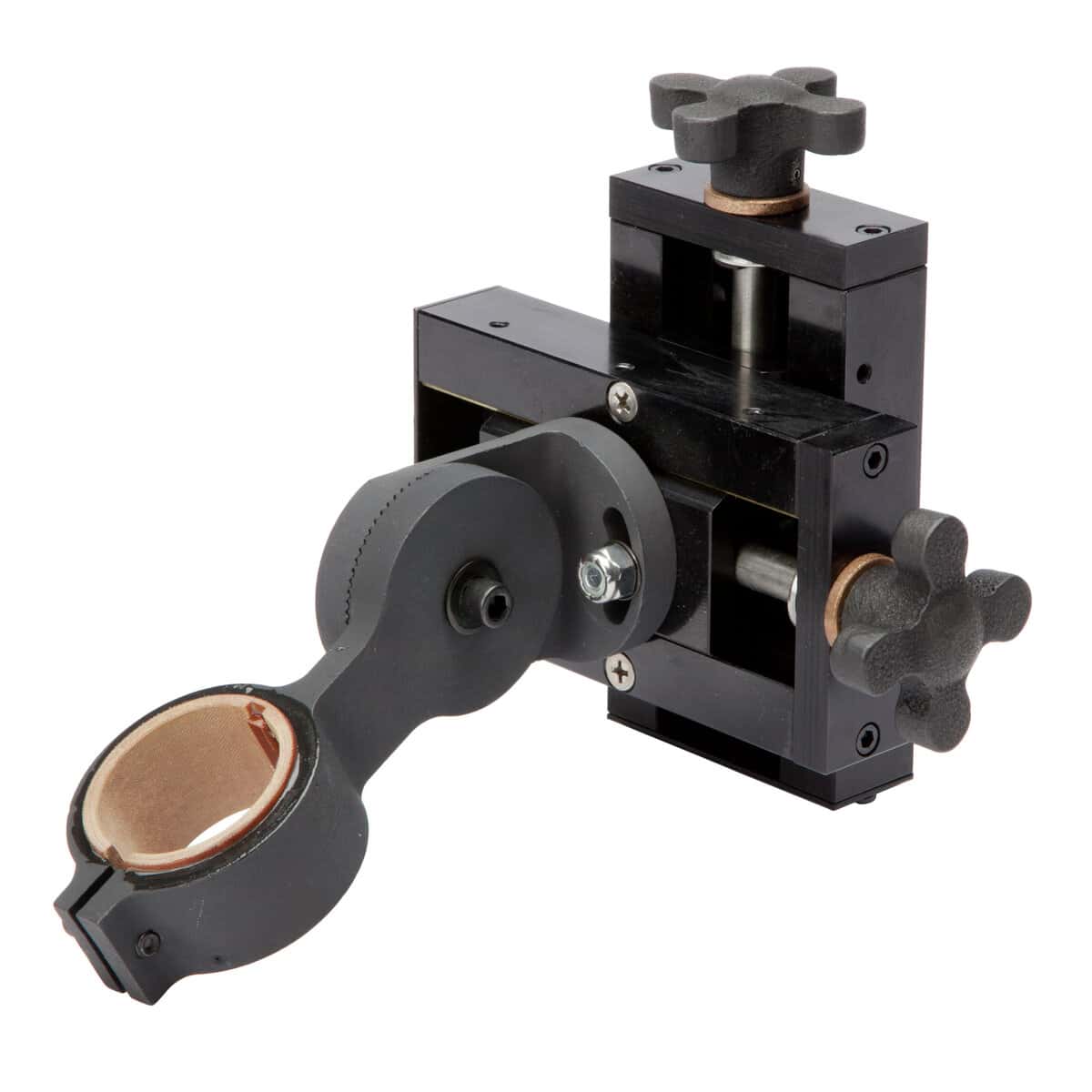
For professional welding operators and automation technicians utilizing the Lincoln Electric Seam Tracker™ Standard System, the KP52026-1 Five-Axis Probe Bracket is the key to achieving superior weld tracking accuracy. In automated submerged arc or MIG welding, the relationship between the sensor probe and the welding arc is the single most important variable for successful tracking. This bracket is specifically designed to mount on the torch and provide the necessary adjustability to position the seam sensor in the exact orientation required relative to the joint and the arc.
The standout feature of this bracket is its adjustability. As the name implies, the Five-Axis Probe Bracket offers multi-directional freedom, allowing you to manipulate the sensor's position to suit specific joint configurations. The manufacturer specifications highlight 1.5 inches of adjustment in two specific axes, providing ample travel to fine-tune the probe's offset. This is critical when dialing in the "lead" distance—the distance the probe sits ahead of the arc. If the probe is too close, it may be damaged by heat or spatter; if too far, the system's reaction time to joint deviations may be delayed. This bracket allows you to find that perfect sweet spot for optimal responsiveness.
Rigidity is another major advantage of the KP52026-1. Once the geometry is dialed in, the bracket locks firmly into place. In a high-duty-cycle environment, vibration from the travel carriage or wire feeder can cause lesser mounts to drift, leading to a wandering weld bead. Lincoln Electric has engineered this bracket to maintain its setting throughout the shift, ensuring consistent bead placement. This reliability is essential when welding long seams on pressure vessels, beams, or large tanks where stopping to readjust the sensor is not an option.
Installation is straightforward, designed to interface directly with standard Lincoln Electric torch setups used in conjunction with the Seam Tracker system. The bracket facilitates the correct angle of attack for the probe tip, ensuring it rides the joint sidewalls or root effectively without binding or skipping. By enabling precise control over the sensor's geometry, the KP52026-1 allows the Seam Tracker to compensate for thermal distortion and fit-up irregularities in real-time, resulting in high-quality welds that meet stringent code requirements with minimal operator intervention.
| Additional Information |
|---|
| Brand:Lincoln Electric |
| Packaging Description:1 Per Ea |
| Accessory Type:Five-Axis Probe Bracket |
| Compatible Machine Model:Seam Tracker™ Standard System |
| Adjustment Range:1.5 in (Two Axis) |

 $350 Rebate

 $350 Rebate