Canadian owned and operated

The K3606-IRB2600ID-20 One-Pak is a turnkey solution for shops ready to upgrade their automation capabilities. This package centers around the ABB IRB 2600ID-8/2.00, a robot specifically engineered for arc welding applications. With an 8 kg payload and a generous 2.00-meter reach, this arm offers the flexibility to weld large parts or navigate complex fixtures. The standout feature for technicians and maintenance crews is the Integrated Dressing (ID) technology. By housing the dress pack inside the arm, the system eliminates the swinging cables that typically whip around during fast reorientation, significantly extending the life of your torch cables and reducing maintenance intervals.
Power and Performance
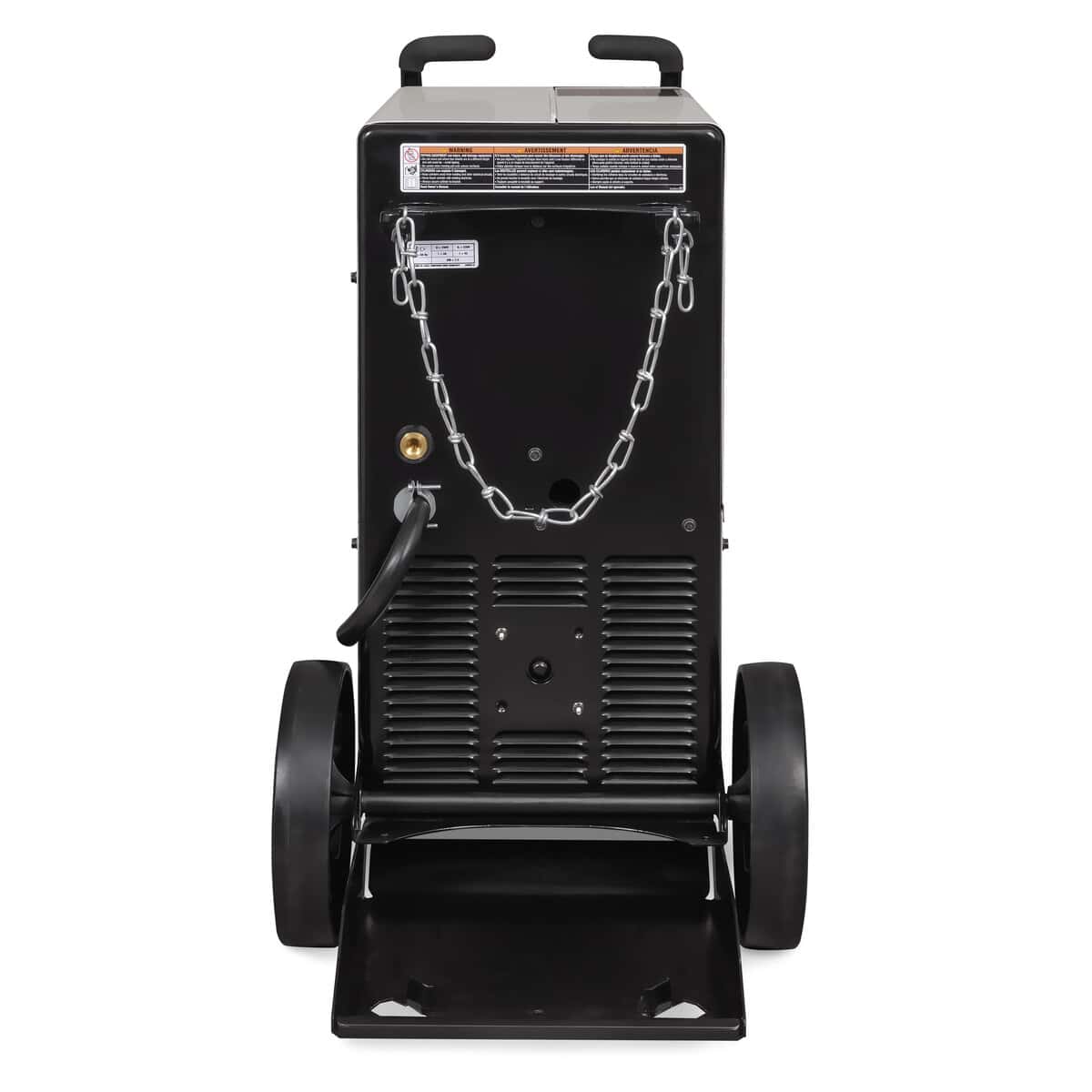
The welding current is supplied by the Power Wave R450, a high-output, multi-process machine capable of delivering 450 amps at 100% duty cycle. It communicates seamlessly with the robot controller via ArcLink, the industry's fastest digital communication protocol for welding. This ensures that changes in arc conditions are detected and corrected in microseconds. The package also includes the AutoDrive 4R220 wire feeder, a powerful four-roll robotic feeder designed to push wire through the complex articulations of the robot arm without slipping or bird-nesting. The MAXTRAC wire drive system provides consistent feeding force, which is essential for maintaining a stable tool center point (TCP) and achieving defect-free welds.
Integration and Control
This One-Pak is designed to get you up and running faster. The components are pre-selected to work in perfect harmony. The Power Wave R450 supports Lincoln's CheckPoint software, allowing welding engineers to monitor weld data, track OEE, and store weld schedules in the cloud. This level of connectivity and control makes the K3606-IRB2600ID-20 not just a welding machine, but a complete data-driven production tool.
| Additional Information |
|---|
| Brand:Lincoln Electric |
| Weld Process:MIG (GMAW) |
| Amperage:450 |
| Process Type:Robotic MIG, Pulsed MIG, Flux-Cored |
| Robot Model:ABB IRB 2600ID-8/2.00 |
| Power Source:Power Wave R450 |
| Wire Feeder:AutoDrive 4R220 |
| Robot Payload:8 kg |
| Robot Reach:2.00 m |
| Cable Management:Integrated Dressing (ID) |
| Input Voltage:208/230/380-415/460/575/3/50/60 |
| Packaging Description:1 Per Ea |
 $350 Rebate
 $350 Rebate