Skip to Main Content
Canadian
Canadian owned and operated
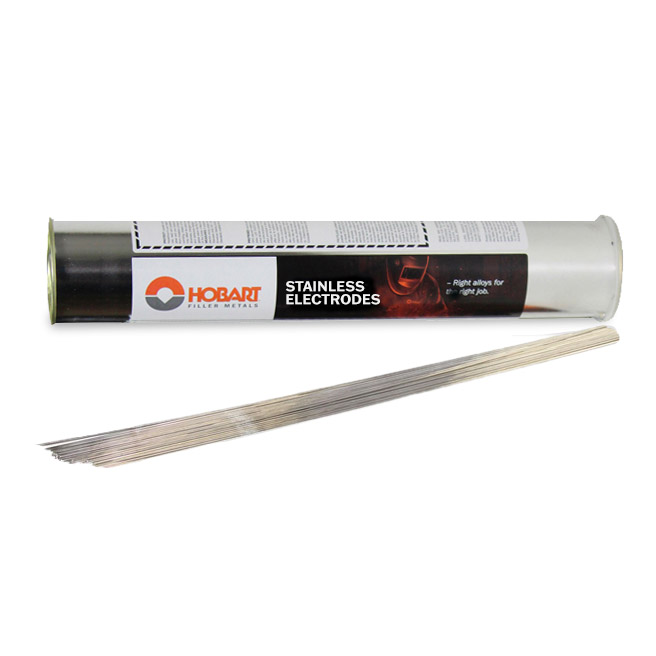
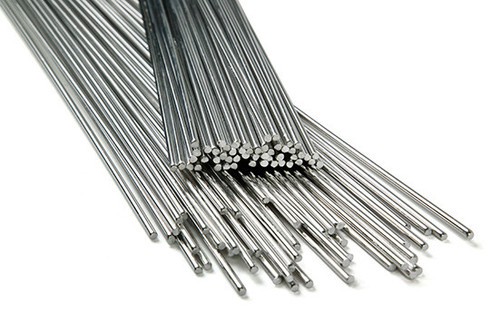
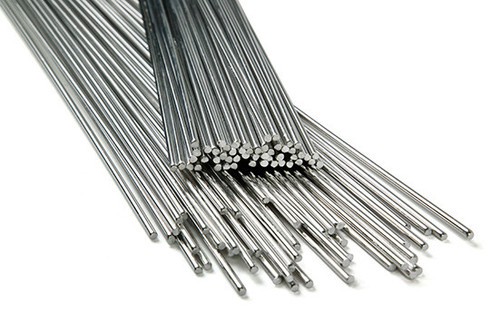
S480644-032 - Hobart Sterling AP E312-16 Stainless Steel Stick Electrode 1/8"

Packaging: 18lb can
$46.86/lb $421.74/18lb can only $23.43/lbSave 50%

Usually ships within 3-5 business days

OVERVIEW

Technical Analysis: Hobart Sterling AP 312 (E312-16)

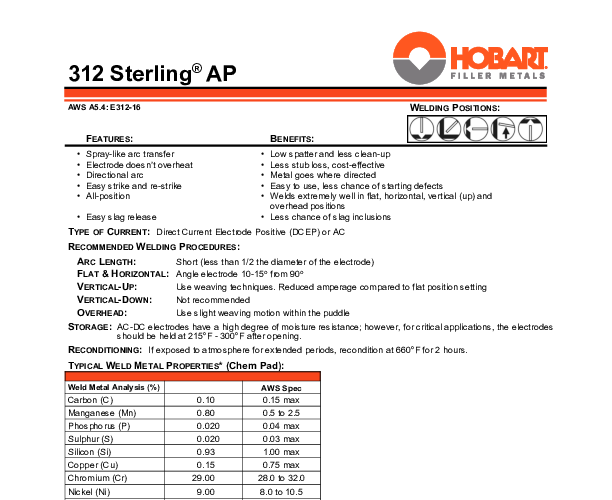
The Hobart Sterling AP 312 is a premium quality E312-16 stainless steel coated electrode designed for the Shielded Metal Arc Welding (SMAW) process. Metallurgically, Type 312 stainless steel is a duplex-structure alloy containing approximately 29% chromium and 9% nickel. This chemistry produces a weld deposit with a very high ferrite number (typically FN 50 or higher). The high ferrite content is the key to its exceptional resistance to solidification cracking and hot cracking, even when highly diluted by high-carbon or alloyed base metals.

This electrode is specifically formulated to provide high tensile strength, typically exceeding 120,000 PSI, which is significantly higher than standard 308 or 316 stainless electrodes. The deposit also exhibits excellent work-hardening characteristics, making it suitable for applications subject to impact and abrasion. It serves as an excellent buffer layer for hardfacing applications, providing a ductile interface between a brittle hardfacing overlay and a tough base metal. The rutile-based coating ensures a smooth spray-type transfer with minimal spatter and excellent arc stability.

Operational Characteristics:

The Sterling AP 312 is designed for "All Position" (AP) welding. The fast-freezing slag allows for control in vertical-up and overhead positions without the need for excessive manipulation. It runs well on both AC and Direct Current Electrode Positive (DCEP). When welding dissimilar metals, such as joining 304 stainless to mild steel or AR400 plate, the 312 alloy accommodates the differences in thermal expansion and dilution, preventing the formation of brittle martensitic phases in the fusion zone.

Recommended Applications:

  • Dissimilar Joints: Carbon steel to stainless steel, or low-alloy steel to high-alloy steel.
  • Unknown Steels: Ideal for maintenance repairs where the base metal grade is unidentified.
  • Tool & Die Repair: Repairing cracks in tool steels, dies, punches, and shears.
  • Underlayment: Cushion layer before applying hardfacing to prevent spalling.
Additional Information
Brand:Hobart
Diameter:3.2mm (1/8")
Aws Spec:E312
Weld Process:Stick (SMAW)
Polarity:AC/DCEP
Grade:312
Rod Type:Stick Electrode
Material Composition:Stainless Steel 312
Welding Position:All Position
Tensile Strength:120,000 PSI
Coating Type:Rutile
Applications:Dissimilar Metals, Maintenance Repair, Tool Steel
Packaging Description:18lb can

INCLUDED

  • 1 x Can of Hobart Sterling AP 312 Stick Electrodes (1/8" Diameter)

APPLICATIONS

  • Joining carbon steel to stainless steel
  • Repairing tool steels, dies, and punches
  • Welding abrasion-resistant plates and manganese steels
  • Repairing leaf springs, drive shafts, and gears
  • General maintenance on unknown steel grades
  • Buffer layers for hardfacing applications
  • Repairing cast steel components

FAQ

They are primarily used for maintenance and repair, specifically for joining dissimilar metals (like carbon steel to stainless) or welding hard-to-weld steels such as tool steel and spring steel.

Yes, the Hobart Sterling AP 312 is designed to operate smoothly on both AC and DCEP (DC+) currents.

While stainless electrodes are less susceptible to moisture than low-hydrogen carbon steel rods, it is best practice to store them in a dry environment. If the can is opened, keeping them in a rod oven at 250°F-300°F helps maintain optimal performance.

It has a high tensile strength and a chemical composition that resists cracking, allowing it to successfully weld steels that would normally crack with standard electrodes.

The weld deposit typically has a tensile strength of approximately 120,000 PSI, making it extremely strong and durable.

Yes, Josef Gas offers bulk purchasing options for industrial clients. Please contact our sales team for volume pricing on Hobart welding consumables.

While 312 can sometimes be used on certain cast steels, it is generally not the first choice for cast iron (high nickel rods are preferred). However, it is excellent for joining steel to cast steel.

It means the slag coating that forms over the weld bead cools and contracts in a way that it often pops off by itself or requires very little effort to remove, speeding up cleanup.

CATALOGUE & SPEC SHEETS

Spec Sheet
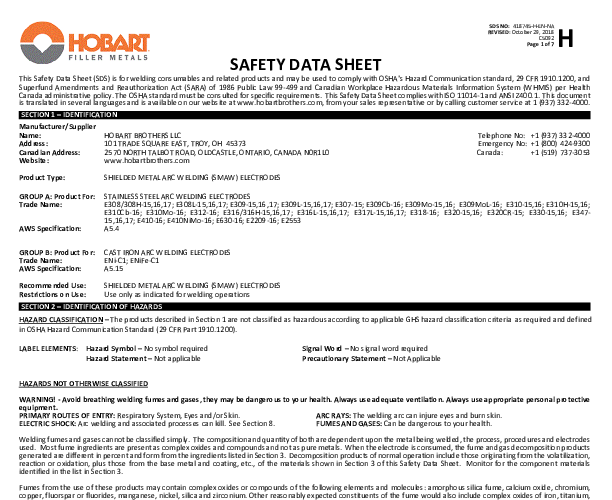
Safety Data Sheet