Skip to Main Content
Canadian
Canadian owned and operated
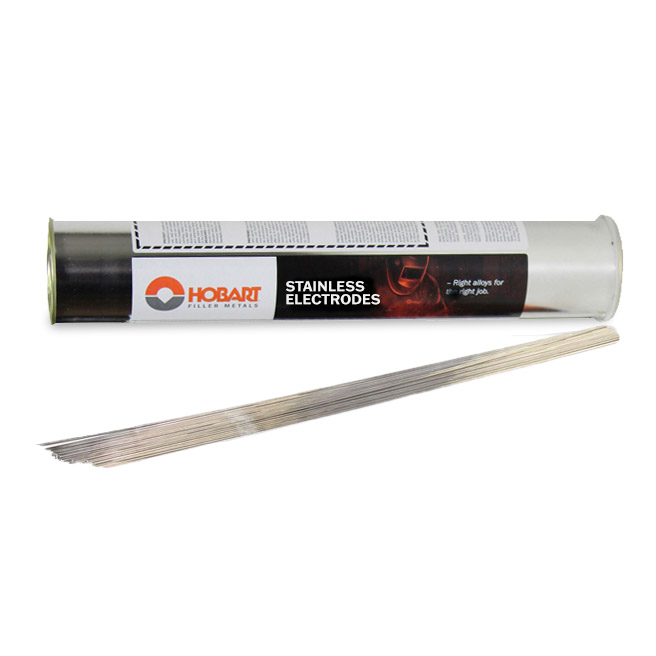
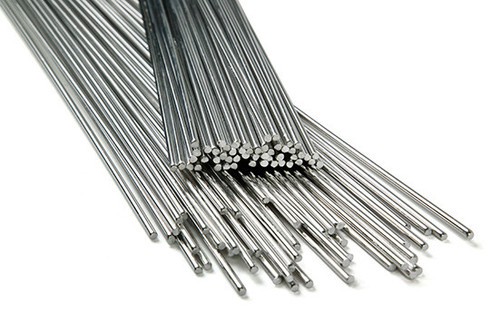
S480631-036 - Hobart Sterling AP 312 Stainless Steel Stick Electrode, 3/32", 5lb Can

Packaging: 15lb can
$46.86/lb $351.45/15lb can only $23.43/lbSave 50%

Usually ships within 3-5 business days

OVERVIEW

The Ultimate "Problem Solver" Welding Rod for Your Shop

When you aren't sure what kind of steel you are welding, or when you need to join two completely different types of metal, reach for the Hobart Sterling AP 312. Often called the "universal" maintenance rod, this 3/32" stick electrode is a must-have for any welder's arsenal. It is designed to handle the toughest repair jobs where standard rods would crack or fail. From fixing broken leaf springs and tool steels to welding stainless brackets onto mild steel frames, the Sterling AP 312 gets the job done right the first time.

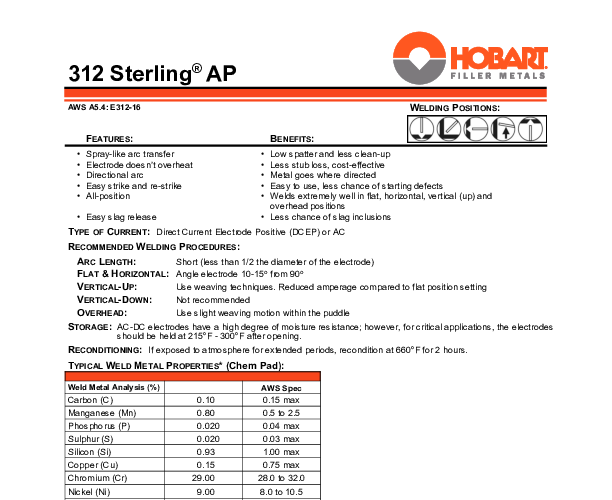
One of the standout features of this rod is how easily it runs. You don't need a fancy machine; it operates smoothly on both AC and DC welders. The "AP" stands for All Position, meaning you can run a vertical-up bead or an overhead weld with the same ease as a flat weld. The arc is smooth and predictable, and the slag practically falls off by itself as it cools, leaving you with a shiny, professional-looking bead that inspires confidence.

This 5lb can is perfect for maintenance shops, farms, and mobile welding rigs. Because it resists cracking so well, it's the safest bet for repairing parts made of high-carbon steel or unknown alloys. It puts down a weld with incredibly high tensile strength—much stronger than standard 7018 or 6010 rods—ensuring your repairs hold up under stress. Stop guessing and start welding with the rod that handles it all.

Why Welders Choose Sterling AP 312

  • Versatility: Welds stainless to mild steel, tool steels, and unknown grades.
  • Easy to Run: Smooth arc on AC or DC, with easy slag removal.
  • Strong Welds: Extremely high strength prevents re-cracking of repairs.
  • All Position: Great for field repairs where you can't move the workpiece.
Additional Information
Brand:Hobart
AWS Spec:E312-16
Diameter:2.5mm (3/32")
Grade:312
Packaging:5 lb Tube
Weld Process:Stick (SMAW)
Polarity:AC/DCEP
Rod Type:Stick Electrode
Coating Type:Rutile
Welding Position:All Position
Tensile Strength:120,000 PSI
Applications:Dissimilar Metals, Maintenance Repair, Tool Steel
Packaging Description:15lb can

INCLUDED

  • 5 lb Can of Hobart Sterling AP 312 Stick Electrodes (3/32" Diameter)
  • Instruction Label

APPLICATIONS

  • Joining stainless steel to mild or carbon steel
  • Repairing tool steels, dies, and punches
  • Welding abrasion-resistant (AR) plates
  • Repairing broken leaf springs and drive shafts
  • Buffer layers before hardfacing
  • General maintenance on unknown steel compositions

FAQ

It is primarily used for welding dissimilar metals (like stainless to mild steel), hard-to-weld steels (like tool steel or spring steel), and for general maintenance repairs where the base metal composition is unknown.

Hobart Sterling AP 312 runs well on both DCEP (Direct Current Electrode Positive) and AC (Alternating Current).

While storing in a rod oven is best practice for all low-hydrogen style applications, E312-16 has a rutile coating that is less sensitive than basic low-hydrogen rods. However, keeping them dry is essential for optimal performance. If they become damp, reconditioning at 250°F-300°F for one hour is recommended.

While it can be used for some steel-to-cast-iron applications, it is not a dedicated cast iron rod (like high nickel rods). It is better suited for high-carbon steels and dissimilar steel joints.

The weld deposit typically has a tensile strength of approximately 120,000 psi, which is significantly higher than standard mild steel electrodes.

Yes, the Sterling AP formulation is known for having self-detaching slag in many cases, or slag that is very easy to chip off, leaving a clean bead.

'AP' stands for 'All Position', indicating that this electrode is designed to weld effectively in flat, horizontal, vertical, and overhead positions.

Yes, the weld deposit is generally machinable, although it is quite strong and tough. It will work-harden, so sharp tools and proper speeds are required.

CATALOGUE & SPEC SHEETS

Spec Sheet
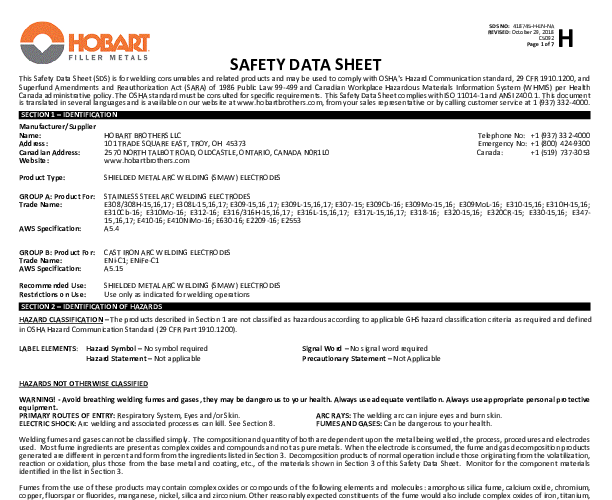
Safety Data Sheet
Google Rating
4.9
Based on34reviews
×
js_loader