Skip to Main Content
Canadian
Canadian owned and operated
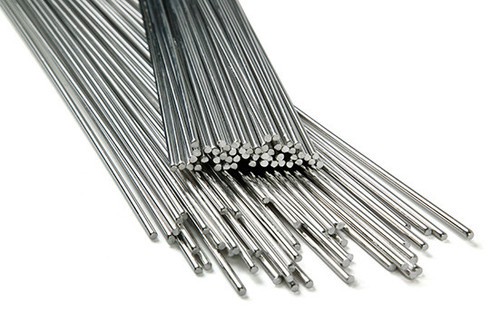
TG316L-125E - Bohler E316L-17 Stainless Steel Stick Electrode 3.2mm (1/8")

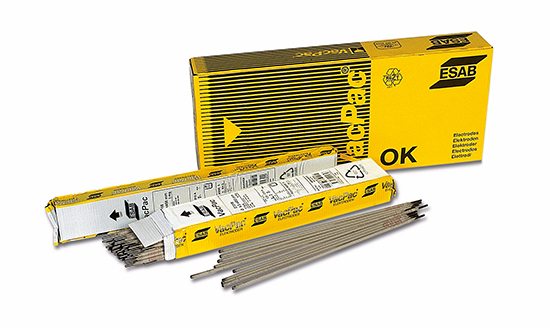
Packaging: 12.3kg pack
$43.94/kg $337.76/12.3kg pack only $27.46/kgSave 38%

Usually ships within 3-5 business days

OVERVIEW

Smooth Running Stainless Stick Rod

If you are looking for a stainless steel stick electrode that runs like butter, the Bohler 316L-17 is your answer. Designed for welders who demand ease of use without sacrificing quality, this 3.2mm (1/8") rod takes the headache out of welding stainless steel. The "-17" in its classification indicates a rutile coating, which is the secret behind its incredibly smooth arc and user-friendly characteristics. Unlike some stainless rods that fight you with an erratic arc or stubborn slag, the Bohler 316L-17 lays down a flat, clean bead with slag that often lifts off by itself as it cools.

This electrode is an all-rounder for 300-series stainless projects, specifically matched for 316 and 316L base metals. Whether you are repairing food processing equipment, fixing a marine fitting, or fabricating a custom stainless tank, this rod delivers professional results. It strikes easily and restrikes without sticking, which is a huge advantage when you are doing tack welds or stop-start stitching. The spatter is virtually non-existent, meaning you spend less time grinding and cleaning up your workpiece and more time welding.

Versatility is key in the shop or on the truck, and this rod delivers by running beautifully on both AC and DC+ welders. If you have an older buzz box or a modern inverter, you can trust this Bohler electrode to perform. The 3.2mm size is the "goldilocks" diameter—heavy enough to fill joints in 1/8" to 1/4" plate efficiently, but controllable enough to manage heat input on slightly thinner sections. It produces a finely rippled bead that looks great even before polishing.

Why Welders Choose Bohler 316L-17

  • Self-Releasing Slag: Saves you time on cleanup; often peels up in one piece.
  • Minimal Spatter: Keeps your stainless base metal clean and reduces post-weld finishing.
  • Easy Strike/Restrike: Reduces frustration and porosity at the start of the weld.
  • Great Appearance: Produces a flat, concave bead profile that blends well with the base metal.
Additional Information
Brand:Bohler
Diameter:3.2mm (1/8")
Aws Spec:E316L-17
Grade:316
Weld Process:Stick (SMAW)
Polarity:AC/DC
AWS Classification:E316L-17
Rod Type:Stick Electrode (SMAW)
Coating Type:Rutile
Core Material:Stainless Steel 316L
Welding Position:All positions (except vertical down)
Current Type:AC, DC+
Packaging Description:12.3kg pack
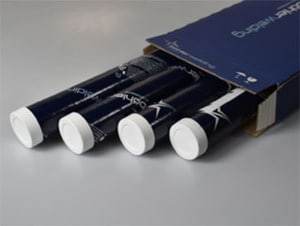
Packaging:10 lb Tube

INCLUDED

  • Bohler 316L-17 Stick Electrodes (3.2mm)
  • Protective Packaging

APPLICATIONS

  • Food and beverage processing equipment
  • Chemical and pharmaceutical tanks
  • Textile and pulp & paper machinery
  • Marine fittings and architectural stainless
  • General fabrication of 316/316L stainless steel

FAQ

For a 3.2mm (1/8") E316L-17 electrode, the recommended amperage range is typically between 80A and 120A, depending on the position and base metal thickness.

No, E316L-17 electrodes are designed to run on AC or DC Electrode Positive (DCEP/DC+). Using DC- may result in an unstable arc and poor fusion.

The 'L' stands for Low Carbon. 316L has a lower carbon content (max 0.03%) than standard 316, which prevents carbide precipitation and ensures better corrosion resistance after welding.

Rutile stainless electrodes are less sensitive to moisture than basic rods, but they should be stored dry. If they have been exposed to damp conditions, re-drying at 300°C-350°C for 2 hours is recommended.

Generally, no. E316L-17 electrodes have a fluid slag system best suited for flat and horizontal positions. For vertical welding, vertical-up is the recommended technique.

Yes, you can use 316L filler to weld 304 stainless steel, but it is more expensive than 308L. However, you should not use 308L to weld 316 stainless as it lacks the Molybdenum required for corrosion resistance.

The '-17' suffix indicates a titania (rutile) based coating with silica, which provides a smooth spray-like arc, fine ripples, and easy slag removal.