Canadian owned and operated
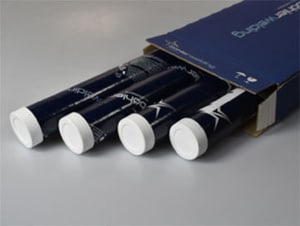
Experience the difference of OEM quality with the Bohler 316L-17 Stick Electrode. This 4.0mm stainless steel welding rod is designed for professional welders who demand precision, reliability, and ease of use. Classified as an E316L-17 under AWS standards, it features a fully alloyed core wire and a high-performance rutile coating that transforms the welding of stainless steel into a smooth, controlled process. Unlike basic coated electrodes, this rod strikes easily and maintains a stable arc even at lower amperages, reducing the risk of burn-through on thinner sections while handling the heat required for the 4.0mm size.
The "17" in the classification denotes a silica-titania coating, which promotes excellent wetting action. The weld puddle flows smoothly into the toes of the weld, creating a flat to slightly concave profile that is highly resistant to stress concentration. Welders will appreciate the exceptionally low spatter levels and the easy slag detachability—often curling up on its own as the weld cools. This significantly reduces downtime spent on chipping and grinding, allowing for faster project completion.
Designed for critical applications, this electrode deposits weld metal with high resistance to intergranular corrosion and pitting. It is the ideal choice for welding 316 and 316L grades of stainless steel used in tanks, piping systems, and structural components exposed to corrosive media. The electrode performs flawlessly in the flat and horizontal positions and can be used out-of-position with proper technique. Compatible with both AC and Direct Current Electrode Positive (DCEP), it offers versatility for field and shop work alike.
When weld integrity and surface appearance are paramount, the Bohler 316L-17 stands out as a top-tier solution. Its consistent chemical composition ensures that every rod performs exactly like the last, giving you the confidence to tackle complex stainless steel projects with professional results.
| Additional Information |
|---|
| Aws Spec:E316L-17 |
| Brand:Bohler |
| Diameter:4.0mm (5/32") |
| Grade:316 |
| Weld Process:Stick (SMAW) |
| Polarity:AC/DC |
| Rod Type:Stick Electrode |
| Core Material:Stainless Steel |
| Coating Type:Rutile |
| AWS Classification:E316L-17 |
| Welding Position:All Position (except vertical down) |
| Applications:Chemical Processing, Food Industry, Marine |
| Packaging Description:12.9kg pack |
| Packaging:10 lb Tube |