Canadian owned and operated

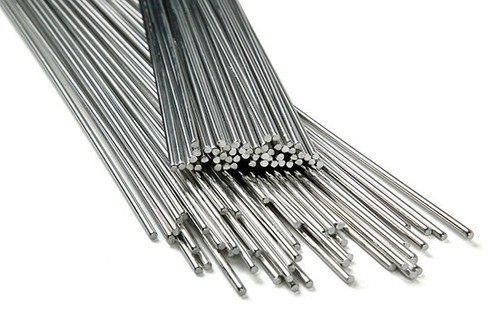
For professional welders and industrial maintenance technicians, the Josef A40 Aluminum Stick Electrode represents a critical tool for in-field aluminum repairs. While TIG and MIG processes are often preferred for aluminum due to their cleanliness, they are not always feasible in outdoor environments or tight spaces where gas coverage is compromised. The Josef A40 bridges this gap, allowing for structural repairs on aluminum alloys (specifically 3000, 4000, and 5000 series) using standard DC stick welding power sources. This 2.5mm rod is an essential component of any mobile welding rig's loadout.
The metallurgy of the Josef A40 is based on an Al-Si5 composition (approx. 5% Silicon), which provides excellent fluidity and resistance to hot cracking—a common issue in aluminum welding. The silicon content lowers the melting point of the weld pool and improves wetting action, allowing the bead to tie into the toes of the weld smoothly. This is crucial when welding castings or dissimilar aluminum grades, as the filler metal needs to accommodate the stresses of solidification without cracking. The 2.5mm diameter allows for operation in the approximate range of 60 to 90 Amps, making it suitable for material thicknesses starting around 1/8 inch (3.2mm) and up.
Operational Tips for Success: Welding aluminum with stick electrodes requires a specific technique. The travel speed must be significantly faster than with steel electrodes to prevent burn-through and excessive heat buildup. The Josef A40 is designed with a heavy flux coating that not only shields the puddle but also forms a slag that lifts impurities. However, this slag can be corrosive if left behind, so thorough post-weld cleaning is mandatory. Pre-heating the base material to approximately 200°F - 400°F (depending on thickness) is highly recommended to assist with fusion and arc starting, as aluminum acts as a massive heat sink.
The 0.5kg tube packaging is a strategic feature for inventory management. Since aluminum flux coatings degrade rapidly when exposed to humidity, large open boxes often lead to wasted product. The compact 0.5kg tube minimizes exposure. Welders should store these rods in a dry, heated cabinet or rod oven if the seal has been broken. With the Josef A40, you gain the capability to tackle urgent aluminum repairs with confidence, utilizing a rod that offers arc stability, good penetration, and mechanical integrity.
| Additional Information |
|---|
| Brand:Josef |
| Diameter:2.5mm (3/32") |
| Grade:Aluminum |
| Packaging:0.5 kg Tube |
| Weld Process:Stick (SMAW) |
| Polarity:DC |
| Position:Flat/Horizontal |
| AWS Classification:E4043 |
| Material Composition:Aluminum-Silicon (AlSi5) |
| Amperage Range:60-90 A |
| Coating Type:Extruded Flux |
| Storage Instructions:Keep dry, Hygroscopic flux |
| Packaging Description:.5kg per tube |