Skip to Main Content
Canadian
Canadian owned and operated

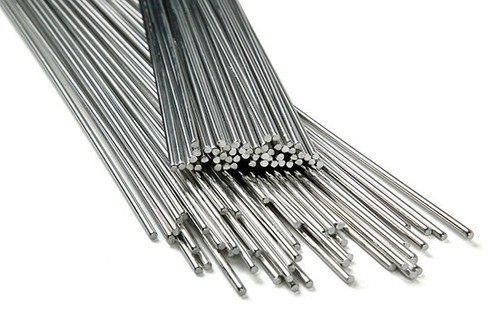
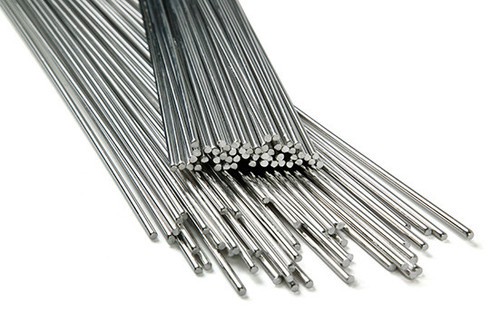
IANICUT00000930T00 - ERNiCu-7 Monel 60 TIG Rod - 3/32" (2.4mm) - 10lb Tube

Packaging: 10 lb tube
$79.62/lb

Package Price:

$796.20/10 lb tube

Usually ships within 3-5 business days

OVERVIEW

Master Marine Welds with ERNiCu-7 Monel TIG Rods

When your project demands the highest level of corrosion resistance and durability in saltwater or chemical environments, reach for our ERNiCu-7 (Monel 60) TIG Welding Rods. Designed for the professional welder, these 3/32" rods provide the smooth running characteristics and puddle control necessary for high-quality nickel-alloy fabrication. Whether you are repairing a boat propeller shaft, fabricating a heat exchanger, or welding piping for a desalination plant, this filler metal ensures your welds stand up to the elements.

Welding nickel-copper alloys requires attention to detail, and our ERNiCu-7 rods are manufactured to help you succeed. The alloy contains titanium, which acts as a deoxidizer to help suppress porosity—a common challenge when welding Monel. The rods flow wet and smooth, allowing you to create aesthetically pleasing beads with excellent tie-in at the toes. Because nickel alloys are sluggish compared to steel, the 3/32" diameter is a perfect middle-ground size, giving you enough deposition for medium passes while maintaining the control needed for root passes or thinner wall tubing.

Application Tips for Success:

  • Cleanliness is Key: Nickel alloys are extremely sensitive to contaminants. Ensure the base metal is completely free of oil, grease, paint, and sulfur compounds before striking an arc.
  • Gas Coverage: Use 100% Argon for most applications. Ensure your gas flow is sufficient to protect the still-hot weld pool and tungsten, but not so turbulent that it aspirates air.
  • Technique: Maintain a short arc length to minimize heat input and prevent atmospheric contamination. Avoid excessive weaving; stringer beads are generally preferred to maintain mechanical properties.

This 10lb tube provides a substantial supply for larger projects or shop inventory. The rigid packaging protects the rods from bending and oxidation, so they stay straight and clean until you are ready to burn them. Equip your shop with the standard for marine welding and deliver results that last.

Additional Information
Brand:Josef
Weld Process:TIG (GTAW)
Diameter:2.5mm (3/32")
Packaging:10 lb Tube
Grade:Nickel Copper
AWS Classification:ERNiCu-7
Material Composition:Nickel-Copper (Monel)
Length:36 in
Shielding Gas Requirement:100% Argon, Argon/Helium Mix
Polarity:DCEN
Tensile Strength:70,000 psi (approx)
Packaging Description:10 lb tube
Position:N/A

INCLUDED

  • 10lb Tube of ERNiCu-7 TIG Welding Rods (36" Length)

APPLICATIONS

  • Marine fabrication (propeller shafts, sea water piping)
  • Chemical processing equipment (pumps, valves)
  • Desalination plants and evaporators
  • Heat exchangers
  • Offshore oil and gas platforms
  • Dissimilar welding (Monel to Steel)
  • Cladding and overlaying steel for corrosion resistance

FAQ

This rod is classified as ERNiCu-7 under AWS A5.14 standards, commonly referred to as Monel 60.

It is primarily used for welding nickel-copper alloys like Monel 400, R-405, and K-500. It is also used for joining these alloys to steel.

100% Argon is the standard shielding gas. For thicker sections, an Argon/Helium mixture can be used to increase heat input.

DCEN (Direct Current Electrode Negative) is the standard polarity for TIG welding nickel alloys.

Yes, ERNiCu-7 is frequently used to weld nickel-copper alloys to carbon steel or for overlaying steel.

Nickel alloys are very sensitive to embrittlement by sulfur, phosphorus, lead, and other low-melting-point elements. Thoroughly clean the weld area with a stainless steel wire brush and acetone to remove all grease, oil, and oxides.

These rods are 0.093 inches in diameter, which is equivalent to 3/32 inches (approx. 2.4mm).

Generally, preheat is not required for nickel-copper alloys unless the base metal is very thick or the ambient temperature is below freezing. Interpass temperature should be kept low (usually below 300°F) to prevent hot cracking.