Canadian owned and operated

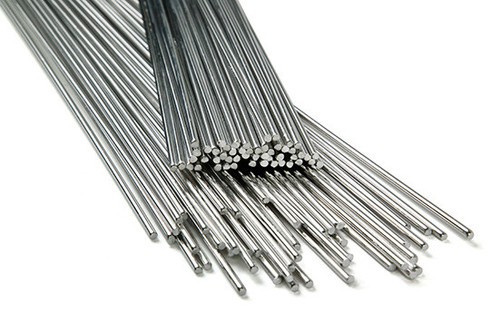
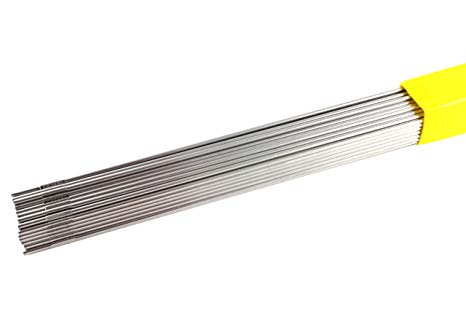
The ERTi-2 Titanium TIG Welding Rod is a high-performance filler metal designed to meet the rigorous requirements of AWS A5.16 specifications. Composed of Commercially Pure (CP) Grade 2 titanium, this rod is the most widely used titanium filler metal in industrial applications. It offers an optimal combination of corrosion resistance and moderate strength, making it the preferred choice for welding ASTM Grade 2 titanium base metals. With a diameter of 1/16" (1.6mm) and a length of 36", these cut lengths provide the manual dexterity and feed control required for precision TIG (GTAW) welding.
Technical Characteristics and Metallurgy
Titanium is a reactive metal, meaning it reacts strongly with oxygen, nitrogen, and hydrogen at high temperatures. The ERTi-2 formulation is carefully controlled to minimize interstitial elements (carbon, oxygen, nitrogen, hydrogen) that can cause brittleness. The weld deposit exhibits excellent ductility and impact toughness, essential for pressure vessels and piping systems subject to thermal cycling or mechanical stress. The rod produces a weld with a yield strength typically around 40,000-50,000 psi, matching the mechanical properties of standard Grade 2 plate and pipe.
Welding Procedure Best Practices
Successful titanium welding requires absolute shielding coverage. The weld pool, the hot solidified weld metal, and the heat-affected zone (HAZ) must all be protected by high-purity inert gas (typically 100% Argon or Helium/Argon mix) until the temperature drops below 800°F (427°C).
Applications
ERTi-2 is extensively used in the chemical processing industry for chlorate manufacturing, desalination plants, and acid production equipment. It is also a staple in power generation for condenser tubing and in the aerospace sector for non-structural components like ducting and brackets. The 1lb tube packaging is ideal for maintenance and repair operations (MRO) or smaller fabrication jobs where bulk quantities are unnecessary.
| Additional Information |
|---|
| Brand:Josef |
| Diameter:1.6mm (1/16") |
| Packaging:1 lb Tube |
| Weld Process:TIG (GTAW) |
| Grade:N/A |
| Material Composition:Titanium Grade 2 |
| AWS Classification:ERTi-2 |
| Rod Length:36" |
| Shielding Gas Requirement:100% Argon |
| Tensile Strength:50,000 psi (Typical) |
| Packaging Description:1 lb tube |
| Position:N/A |
| Polarity:N/A |