Canadian owned and operated
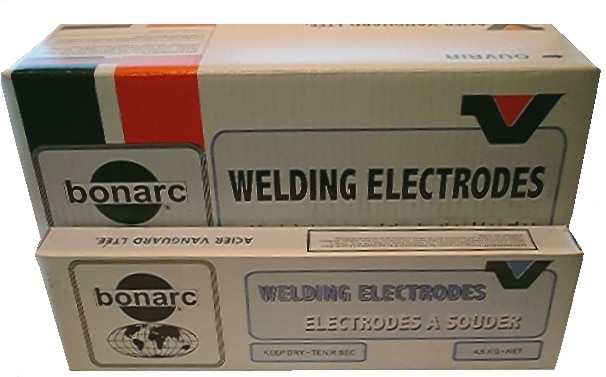
Upgrade your stick welding projects with Bonarc 7018 3.2mm Steel Electrodes, a top-tier choice for welders who demand strength and consistency. Known in the industry as a "low-hydrogen" rod, the E7018 is the standard for structural welding, offering robust mechanical properties that stand up to rigorous testing. This 3.2mm (1/8 inch) diameter version is the most versatile size, perfect for medium to heavy plate thicknesses found in general fabrication, farm repair, and construction.
Welding with Bonarc 7018 is a smooth experience. The electrode is designed to minimize common stick welding frustrations; it offers a quiet arc, low spatter levels, and a fluid puddle that wets out nicely at the toes of the weld. This results in a flat to slightly convex bead profile that looks professional and requires less grinding. Because it is an all-position rod, you can confidently tackle vertical-up and overhead welds without the puddle sagging or dripping, provided you use the correct technique and amperage settings.
The "18" in E7018 signifies that the coating contains iron powder. This ingredient helps carry high current and increases the amount of metal deposited per inch of weld, making your work faster and more efficient. These rods are ideal for welding carbon steels, C-Mn steels, and low-alloy high-tensile steels. To get the best results, ensure your base metal is clean, although 7018 is more forgiving than some other rods, it performs best on prepared surfaces.
Why choose Bonarc? It offers a competitive blend of performance and value. You get the high-impact toughness required for code work (like bridges and buildings) at a price point that makes sense for your shop. Remember to keep these rods dry; a rod oven is highly recommended to preserve the low-hydrogen characteristics that prevent under-bead cracking. With Bonarc 7018, you are equipped to handle everything from heavy equipment repairs to structural steel erection with confidence.
| Additional Information |
|---|
| Brand:Bonarc |
| Diameter:3.2mm (1/8") |
| AWS Spec:E7018 |
| Amp Range:110-150 A |
| Polarity:AC/DCEP |
| Position:All |
| Rod Type:Stick Electrode |
| Coating Type:Low Hydrogen Iron Powder |
| Tensile Strength:70,000 PSI |
| Welding Current:DCEP, AC |
| Material Application:Mild Steel, Carbon Steel, Low Alloy Steel |
| Packaging Description:4.5kg tube |