Skip to Main Content
Canadian
Canadian owned and operated
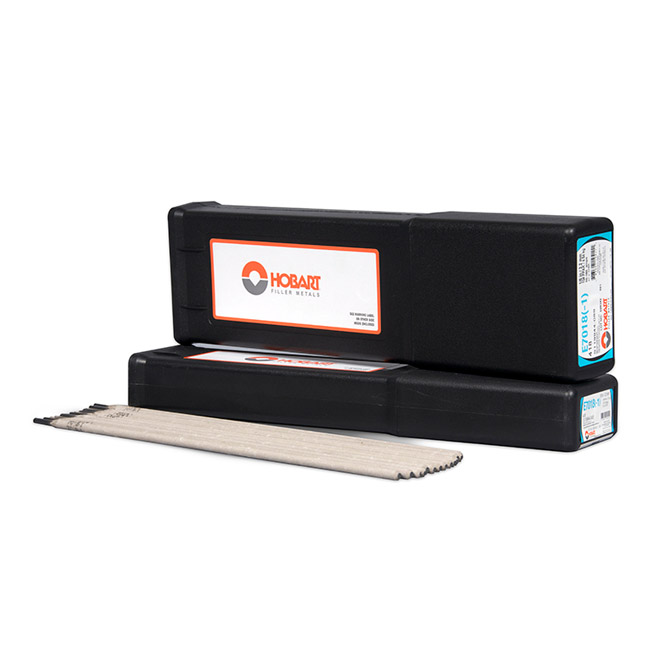
S119844-089 - Hobart 7018AC 1/8" Stick Welding Electrodes

Packaging: 10lb tube
$11.62/lb $72.60/10lb tube only $7.26/lbSave 38%

In stock

OVERVIEW

Upgrade Your AC Welding Experience

If you have ever struggled with your welding rod sticking, sputtering, or the arc constantly going out on your "buzz box" welder, the Hobart 7018AC is the solution you have been looking for. Many standard 7018 rods are designed primarily for heavy industrial DC machines, making them frustrating to use on the AC welders commonly found in home shops, farms, and garages. Hobart has formulated this specific 7018AC electrode to run smoothly on your machine, giving you the professional strength of a low-hydrogen rod without the headache.

Why Choose 7018AC?
This rod is perfect for structural repairs where strength really matters—think trailer hitches, equipment frames, and heavy-duty farm implements. Unlike the 6011 or 6013 rods you might be used to, the 7018AC produces a weld that is more ductile and resistant to cracking, especially on harder steels. It produces a smooth, flat bead with a thick slag that peels off easily, often curling up on its own as it cools. This means less time chipping and grinding and more time welding.

Versatility for Every Job
The 3.2mm (1/8 inch) size is the "goldilocks" of welding rods—heavy enough to weld thick plate but manageable enough for general fabrication. Because it is an "All Position" rod, you can weld flat on a bench, vertically up a frame, or even overhead if the job demands it. It is also excellent for tack welding because it restrikes easily, meaning you won't be pecking at the metal trying to get the arc started again. Whether you are a hobbyist building a smoker or a farmer repairing a plow, these rods will help you lay down stronger, better-looking welds with your existing equipment.

Additional Information
Brand:Hobart
Diameter:3.2mm (1/8")
AWS Spec:E7018
Position:All
Polarity:AC/DCEP, AC, DCEP, DCEN
AWS Classification:E7018
Rod Type:Stick
Coating Type:Low Hydrogen, Iron Powder
Welding Position:All Position
Material Composition:Carbon Steel
Packaging Description:10lb tube
Amp Range:100-160 A

INCLUDED

  • Hobart 7018AC Stick Electrodes (3.2mm / 1/8")
  • Moisture-resistant packaging

APPLICATIONS

  • General fabrication and structural steel
  • Farm and ranch equipment repairs
  • Trailer frames and hitches
  • Maintenance and Repair Operations (MRO)
  • Construction machinery repair
  • Skip and tack welding applications
  • Shop and hobbyist projects using AC welders

FAQ

Standard 7018 electrodes are typically optimized for DCEP polarity and may struggle to maintain an arc on AC power sources with low open-circuit voltage. 7018AC contains special arc stabilizers in the flux coating that prevent the arc from extinguishing when the AC current passes through zero, making it much easier to run on utility AC welders.

Yes, absolutely. While it is designed to excel on AC, Hobart 7018AC runs exceptionally well on DCEN and DCEP polarities, offering great versatility for any machine.

For code-quality work (like structural buildings or pressure vessels), yes, low-hydrogen rods must be stored in an oven to prevent moisture absorption. However, for general farm, home, and non-code repair work, keeping them in a dry, sealed container is usually sufficient.

For a 1/8" 7018AC rod, a good starting range is typically between 110 and 140 amps. You may need to adjust slightly based on your specific machine and the thickness of the metal you are welding.

Yes, this is an all-position electrode. For vertical welding, it is recommended to weld 'vertical up' to ensure proper penetration and bead profile.

The '70' indicates the minimum tensile strength of the weld metal, which is 70,000 psi. This makes it significantly stronger than common mild steel, providing a robust safety factor for repairs.

7018 rods are not 'fast-freeze' deep penetrating rods like 6010 or 6011. They require relatively clean metal. You should grind off rust, paint, and oil before welding to prevent porosity and ensure a strong bond.

CATALOGUE & SPEC SHEETS

Spec Sheet
Safety Data Sheet