Canadian owned and operated
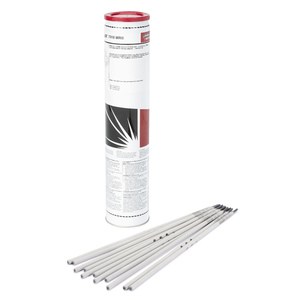
If you have long, flat runs of steel to weld and you want to get the job done in record time, the Lincoln Jetweld 7024-1 is the rod you want in your stinger. Known in the trade as a "drag rod" or "high-speed rod," this 3.2mm (1/8") electrode is built for pure production speed. Unlike all-position rods that require manipulation and careful arc length control, the Jetweld 7024-1 allows you to literally drag the coating lightly on the plate. The thick iron-powder coating does the work for you, maintaining the perfect arc length and pouring metal into the joint faster than you thought possible.
One of the most satisfying features of this electrode is the bead appearance. When you finish a pass, the slag often curls up and peels off by itself—sometimes in one solid piece—revealing a weld that looks almost like it was done by a machine. The ripples are fine and consistent, and the bead profile is smooth and flat, requiring little to no grinding. This makes it a favorite for welders who take pride in the aesthetic look of their work but also need to meet tight deadlines. Because it is an E7024-1 class rod, it also gives you the peace of mind that the weld has superior toughness compared to standard drag rods.
This rod runs beautifully on AC, which is great for eliminating arc blow on complex structural parts, but it runs just as smooth on DC. It strikes easily and restrikes without sticking, reducing frustration during stop-starts. Just remember, this is a gravity-defying rod only in the sense that it lays down heavy metal—it is not for vertical-up or overhead welding. Keep it in the flat or horizontal position, crank up the amps, and watch your productivity soar. Whether you are building heavy equipment frames or welding stiffeners on beams, the Jetweld 7024-1 is your ticket to fast, professional results.
| Additional Information |
|---|
| Brand:Lincoln Electric |
| Diameter:3.2mm (1/8") |
| AWS Spec:E7024 |
| Polarity:AC/DCEN |
| Position:Flat/Horizontal |
| Amp Range:110-170 A |
| AWS Classification:E7024-1 |
| Rod Type:Stick Electrode |
| Coating Type:Iron Powder Titania |
| Welding Position:Flat, Horizontal Fillet |
| Current Type:AC, DC+, DC- |
| Tensile Strength:70,000 psi (min) |
| Impact Properties:Charpy V-Notch at -18°C |
| Packaging Description:5kg tube |