

The Ultimate Welding Safety Checklist: From Auto-Darkening Helmets to Safety Gloves
March 25, 2026 3:22 pm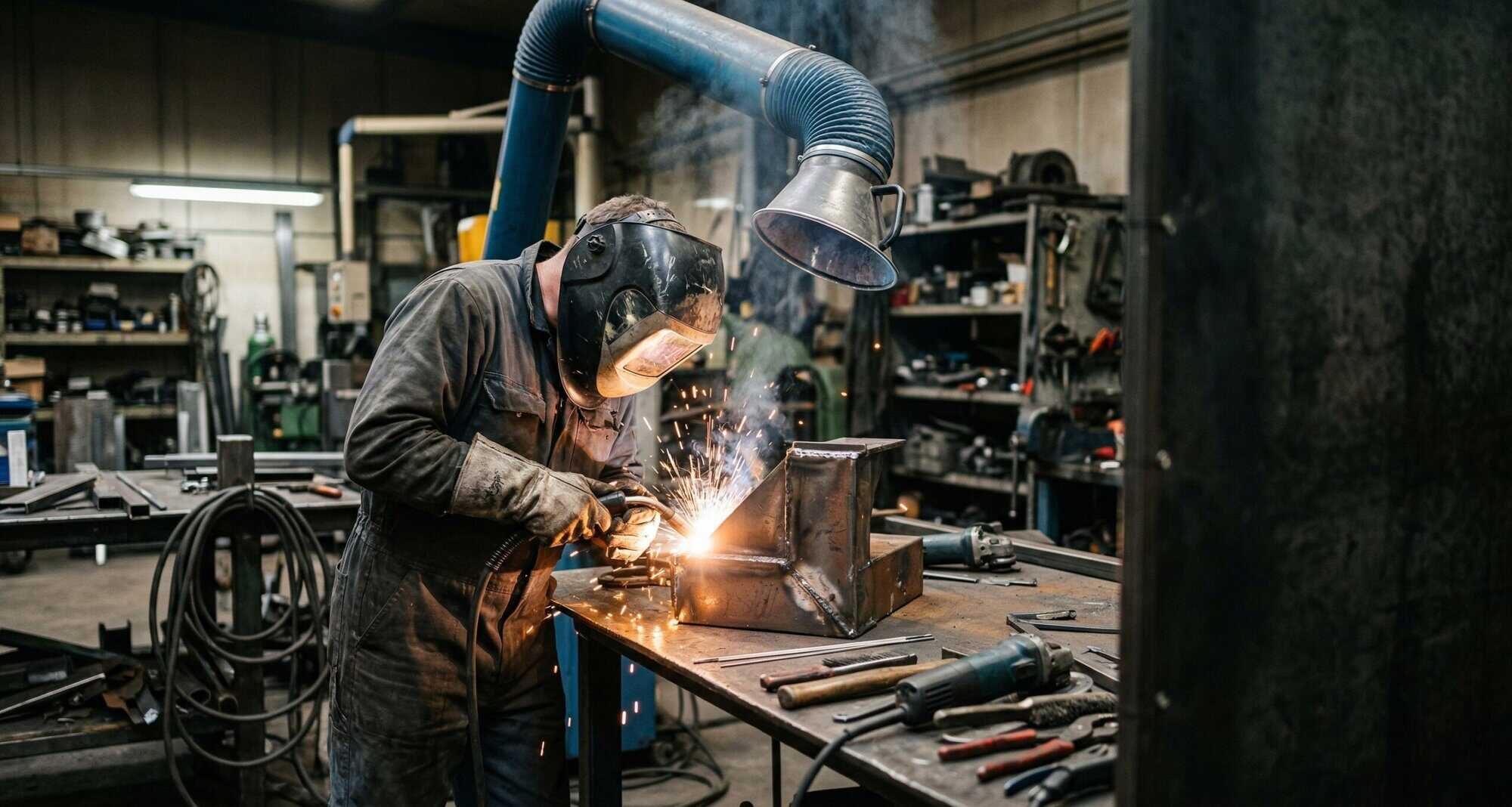
Let’s be real for a second: welding is essentially harnessing the power of a tiny, controlled lightning bolt to melt metal together. It’s glorious, it’s powerful, and it’s a bit like being a wizard with a very high-voltage wand. But, just like any good wizarding shindig, if you don’t have the right protective spells (or in our case, gear), things can go from “magnificent masterpiece” to “wacky disaster” faster than you can say “arc flash.”
Whether you’re a seasoned pro in a massive fabrication shop or a weekend warrior tackling a custom truck frame in your garage, safety isn’t just a “nice-to-have” or a boring line item in your budget. It’s the secret sauce to long-term success. Think of it as your ROI (Return on Integrity… and health!). If you aren’t protecting your eyes, lungs, and skin, you aren’t just risking a bad day; you’re risking your career.
So, grab a latte, settle in, and let’s dive into the ultimate technical checklist that keeps the sparks fly- ing exactly where they should be, on the workpiece, not on your skin. If you are looking for the best welding supplies Canada has to offer, you need to know exactly what should be on your shopping list first.
1. The Crown Jewel: The Auto-Darkening Helmet
If your eyes are the windows to your soul, then a welding arc is like a paparazzi flashbulb on steroids trying to break those windows. We’ve come a long way from the “fixed shade” flip-front buckets of the 1970s. While those old-school lids are reliable, they can be a real literal pain in the neck.
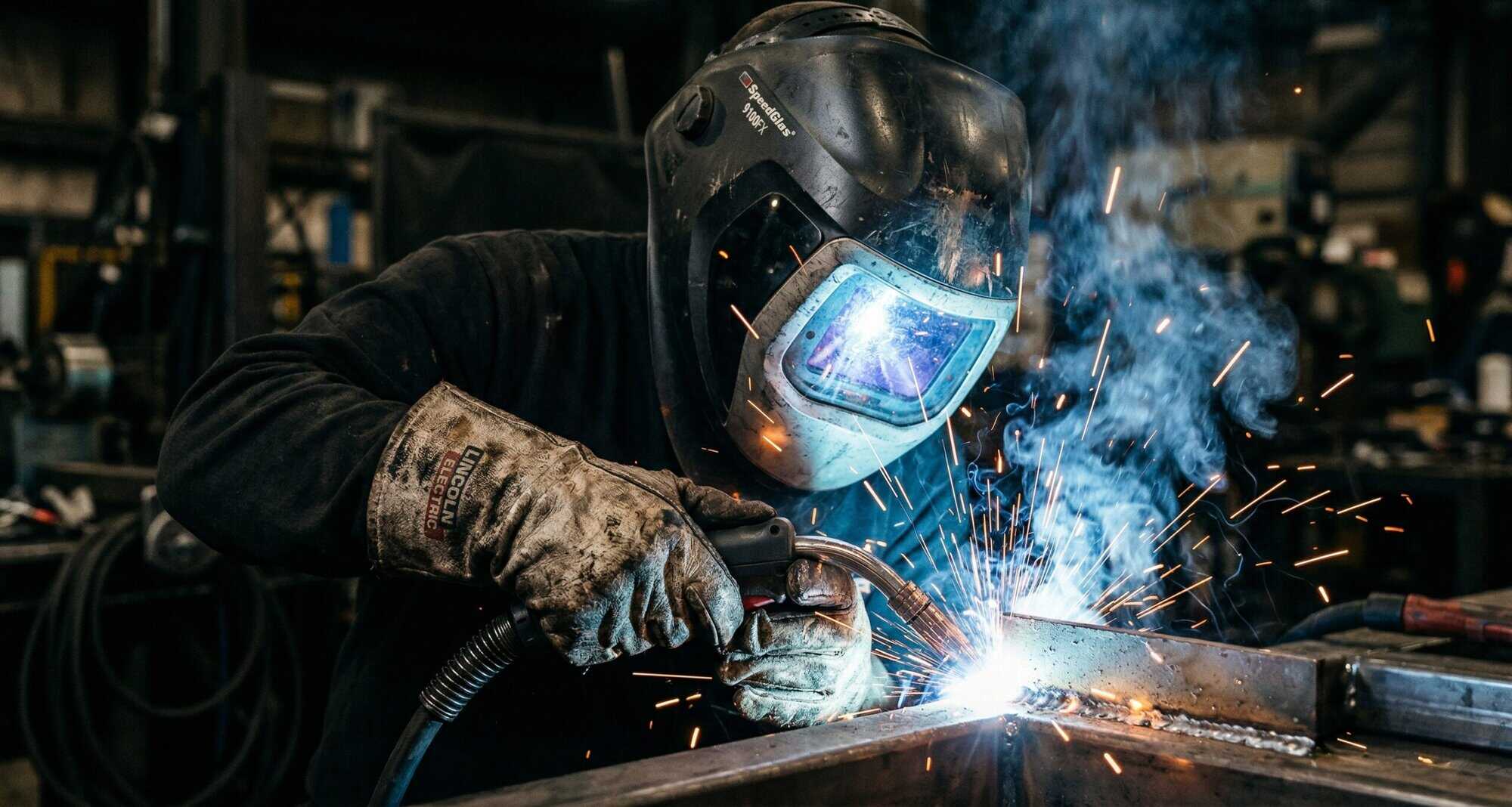
Enter the Auto-Darkening Filter (ADF) helmet. This bit of tech is like the “bling-bling” of the weld- ing world, but it’s packed with serious science. These helmets use liquid crystal displays (LCD) and sensors to detect the arc and switch from a light state (usually shade 3 or 4) to a dark state (shade 9 through 13) in about 1/20,000th of a second. That’s faster than a blink!
A solid example is the ESAB Swarm A20 Auto-Darkening Helmet at WeldersHelper.com—a comfy, pro-grade lid that helps you stay protected without doing the classic “flip-n-pray” head nod. When you’re running a shop (or just trying to keep your eyelashes intact), having a reliable helmet you can actually get shipped on time is the whole ballgame.
The Checklist for Your Dome:
- Optical Clarity: Look for a 1/1/1/1 rating. It sounds like an alphabet soup of numbers, but it actu- ally refers to accuracy of vision, light diffusion, luminous transmittance, and angular dependence. Basically, it means you see the puddle clearly, not like you’re looking through a muddy pond.
- Sensors: More is better. A 4-sensor helmet ensures that even if one sensor is blocked by a pipe or a jig, the others will still “see” the arc and keep you protected.
- Grind Mode: A total game-changer. It allows you to use the helmet as a face shield while cleaning up your welds without the lens darkening every time a spark flies.
- ANSI Z87.1 Compliance: Don’t even think about buying a helmet that doesn’t have this certification stamped on it. It’s the gold standard for impact and radiation protection.
2. Breathing Easy: Fume Extraction and Respiratory Health
Here is a bit of “inside baseball”: that pretty blue smoke coming off your weld? It’s not just “shop at- mosphere.” It’s a cocktail of vaporized metals, manganese, hexavalent chromium (if you’re doing stainless), and lead. Breathing that stuff in is a recipe for “welder’s flash” (metal fume fever), which feels like the flu from a different planet.
We need to treat our lungs like the high-performance engines they are. This is where fume extrac- tion systems come into play.
The Ventilation Hierarchy:
- Source Capture (The MVP): These are portable or stationary units with “elephant trunks” (flexible arms) that suck the fumes right at the source before they even reach your face.
- PAPR Systems (The Astronaut Look): Powered Air Purifying Respirators (PAPR) are helmets that have a belt-mounted blower and HEPA filter. They pump fresh, filtered air into your mask. It’s like having your own personal clean-room environment while you’re working in a dusty shop.
- Ambient Ventilation: Fans and open doors are great for general air movement, but they don’t re- place source extraction. They just move the “bad juju” around the room.
If you’re sourcing gear from top providers of welding supplies Canada, always prioritize filtration. Your future self (and your lungs) will give you a high-five for it later.
3. The Fashion Show: Flame-Resistant (FR) Everything
Let’s talk about the “melt factor.” If you wear a synthetic polyester shirt while welding, a single hot spark can turn that shirt into a permanent part of your skin. Yikes! That’s a “wacky” scenario no one wants.
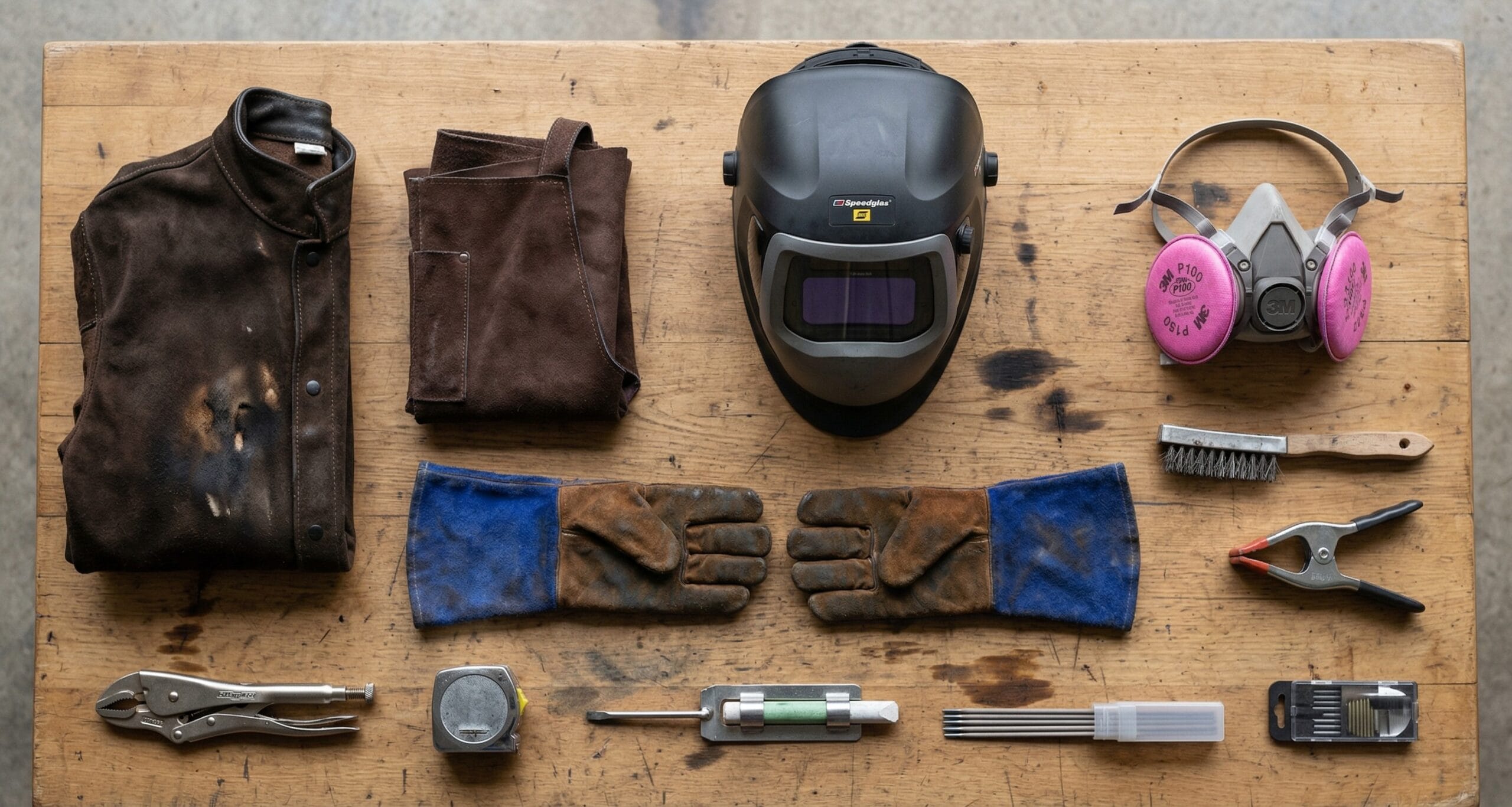
Your shop wardrobe needs to be 100% natural fiber or treated FR material. Leather is the heavy- weight champion here. It’s tough, it’s heat-resistant, and it looks pretty sharp, too.
The Gear Breakdown:
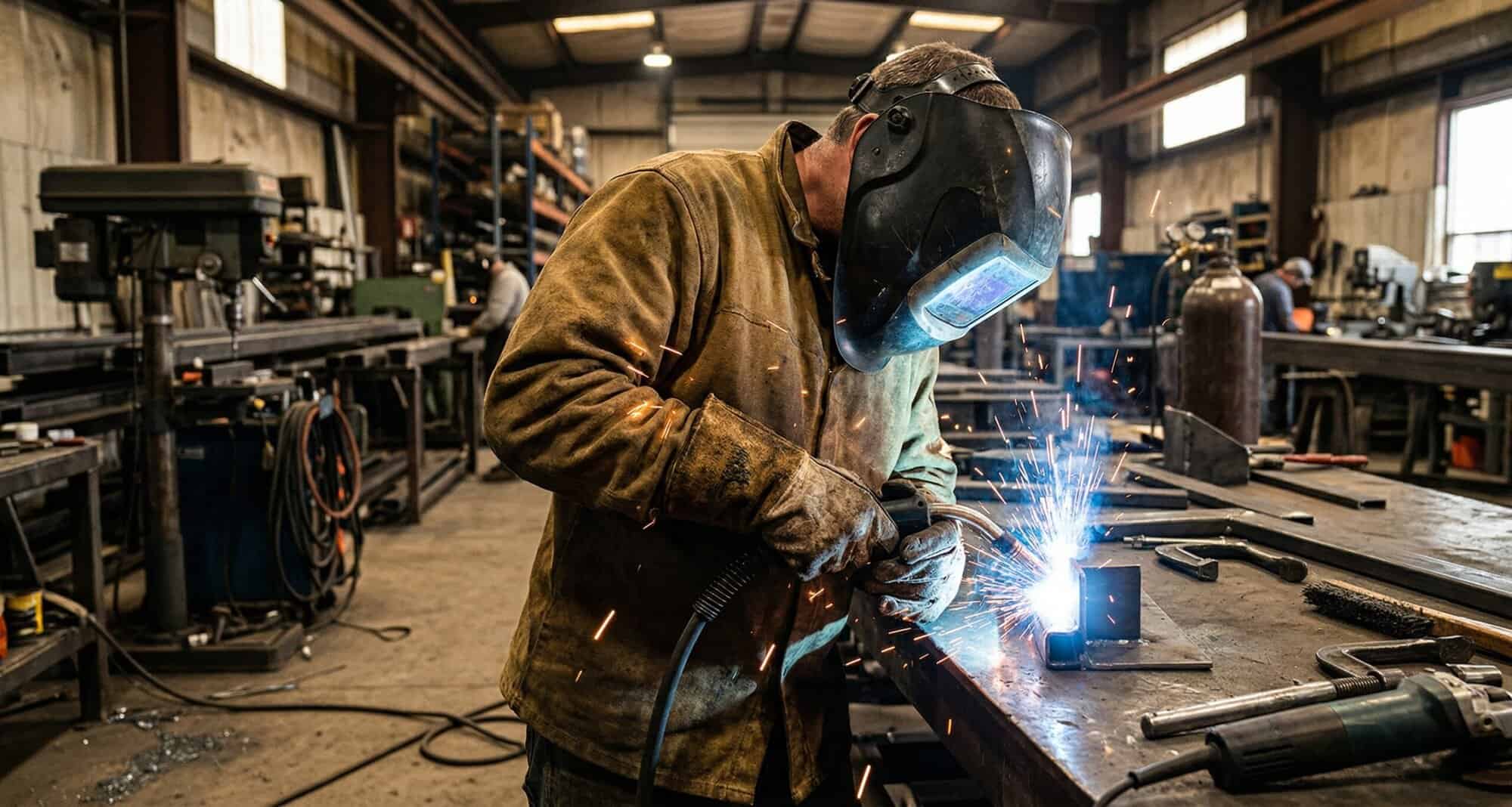
- Welding Jackets: Hybrid jackets (leather sleeves with an FR cotton body) offer a great balance of protection and breathability.
- Gloves: One size does not fit all. You need heavy-duty leather gauntlets for high-heat Stick or MIG welding, and thinner, supple goatskin or deerskin gloves for TIG welding where you need “surgi- cal” dexterity.
- Bibs and Aprons: If you’re doing a lot of overhead work, a leather bib or apron is essential. It pre- vents sparks from falling into your pockets or down your boots, which usually leads to a very fran- tic “welder’s dance.”
4. The Invisible Enemy: Electrical and Gas Safety
Welding involves high amperage and pressurized gases, two things that demand respect. A frayed ca- ble or a leaking regulator is a ticking time bomb.
Electrical Checklist:
- Grounding: Ensure your work clamp is on clean metal. Poor grounding causes the machine to work harder, creates more spatter, and can even lead to electrical shocks.
- Insulation Check: Inspect your leads every morning. If you see copper peeking through the rub- ber, it’s time for a replacement. Don’t just slap some duct tape on it and hope for the best!
- Dryness is Key: Never weld in the rain or while standing in a puddle. Water and high-voltage elec- tricity are a match made in… well, not heaven.
Gas Cylinder Safety (aka “the part where we prevent torpedo cylinders”):
- Secure the Bottles: Cylinders should always be chained to a wall or a cart. A falling oxygen cylin- der can turn into a torpedo that can punch through a concrete wall.
- Cap it Off: If the regulator isn’t on, the safety cap must be on.
- Regulators Matter (no, really): Don’t cheap out on the thing controlling high-pressure gas. Vic- tor Regulators (available on WeldersHelper.com) are a classic, trusted go-to for consistent con- trol—because “surprise pressure spikes” is a horror movie, not a shop goal.
- Check for Leaks: Use a bit of soapy water on the connections. If it bubbles, you’ve got a leak. It’s like checking for a flat tire on your bike, but with much higher stakes.
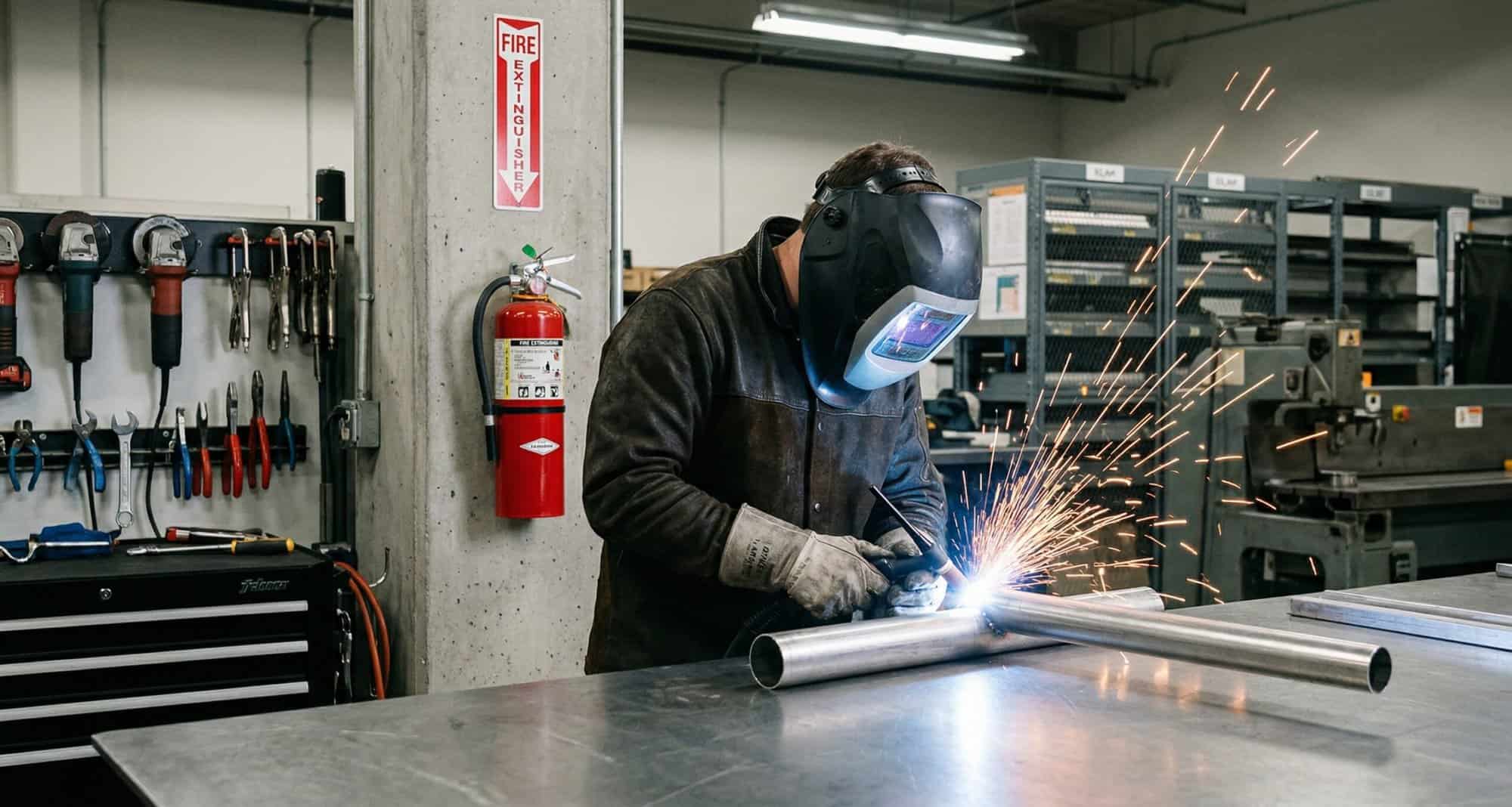
5. Preparing the “Shindig” Space: Fire Prevention
Every welding project is a potential fire. That’s why your work area needs to be as clean as a whistle (or at least as clean as a shop can be).
- The 35-Foot Rule: Keep all flammable materials: sawdust, rags, gasoline cans, paper: at least 35 feet away from your welding area.
- Fire Extinguishers: You need a Class ABC extinguisher within arm’s reach. And make sure it’s actu- ally charged! (Ever tried to use an expired extinguisher? It’s like bringing a squirt gun to a forest fire).
- The Fire Watch: If you’re welding in a sensitive area, have someone stand by for at least 30 min- utes after you finish to make sure no smoldering sparks turn into a midnight inferno.
Why This Matters for Your Business ROI
You might be thinking, “Penny, this sounds like a lot of extra work.” And you’re right! But let’s look at the metrics. A single workplace injury can cost a small business thousands of dollars in lost productiv- ity, insurance hikes, and potential fines. By investing in high-quality gear and following a strict safety checklist, you are literally protecting your profits.
Think of safety as the “SEO” of your physical shop. Just as you optimize a website to prevent it from crashing and burning in the rankings (check out this guide on content mistakes for more on that!), you optimize your shop to keep it running smoothly and profitably.
When you search for welding supplies Canada, don’t just look for the cheapest price. Look for the gear that provides the best protection and durability—and comes from a supplier that won’t leave you hanging when you’re mid-job and the clock is yelling at you.
Why WeldersHelper.com makes shop life easier (especially when safety + uptime are the real “boss level”):
- 100% Canadian Owned Family Business : Built for Canadian welders and Canadian shops (no weird cross-border surprises at checkout).
- Free shipping on orders over $100: Because shipping costs should not feel like a hidden “tax” on doing the right thing.
- Over 35,000 in-stock products: From heavy hitters like Miller, Lincoln, and ESAB, so you can standardize your safety gear instead of playing “brand roulette.”
- Trusted partner = reliable, on-time delivery + consistent stock: This is huge for safety and effi- ciency. When your helmets, regulators, consumables, and PPE are consistently available, your crew doesn’t “make do” with sketchy backups (and that’s when accidents love to RSVP).
- WeldersHelper Bucks program: A little cherry on top, earn rewards while stocking up on the es- sentials you were going to buy anyway (future-you will absolutely take that win).
High-quality gear lasts longer, performs better, and keeps you on the job.
The Final Bead
Welding is an incredible craft. It’s the backbone of construction, art, and infrastructure. But you can’t build the future if you’re stuck in the hospital because of a preventable accident.
Take the time to go through this checklist. Inspect your helmet, check your fume extractor filters, and make sure your leather hasn’t worn thin. It might feel like a bit of a “chore” now, but it’s the only way to ensure you’re still striking an arc twenty years from now.
Stay safe, keep those beads tight, and remember: the best weld is the one you walk away from with all your eyelashes intact!
Stay sparkly!